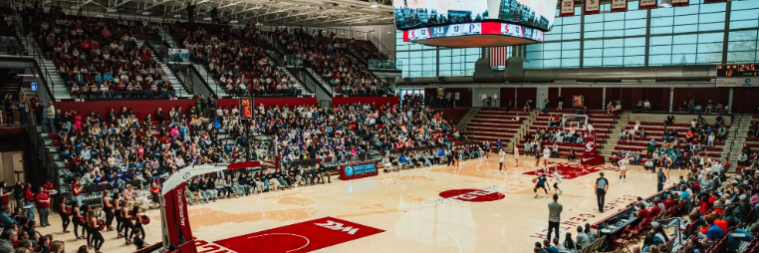
When Santa Clara returned to the NCAA Tournament for the first time since 1996, it did so in a version of college basketball that operates very differently from the one it left. The modern tournament is part of a system where data, media, revenue decisions, and digital infrastructure operate alongside the game.
While fans follow the matchup and the possibility of a run, teams are tracking, responding, and adjusting in real time. Analytics teams track player movement as it happens. Fan engagement teams monitor live response and adjust content as the broadcast unfolds. Revenue teams recalibrate ticket prices based on demand signals that are updated by the minute. The game is one layer. The system around it is another.
This system is where sports business has shifted most. The work happening around the game now includes data analysis, product development, platform management, commercial strategy, and real-time decision-making that functions alongside traditional operations.
For data scientists, product managers, engineers, and quantitatively-minded marketers, this shift creates a growing set of sports technology careers. The focus is on recognising how their existing work fits within a sports organization.
Three Ways Tech Has Fundamentally Changed Sports Business
To understand how sports business has changed, it helps to look at how teams operate, how decisions are made, and the roles that support those processes.
Performance analytics moved from observation to continuous data
A decade ago, analysis in professional sports often meant reviewing footage and tracking basic metrics. Today, it operates as a continuous data system.
Optical tracking technologies such as Second Spectrum and Hawk-Eye capture player and ball movement multiple times per second, generating high-frequency positional data throughout each game. That data is processed using AI models, often hosted on platforms such as Amazon Web Services, to produce advanced statistics that teams and broadcasters use for evaluation and strategy.
Across professional leagues, teams increasingly combine performance data, injury history, and cognitive assessments to estimate how players are likely to perform over time. The question is no longer limited to what happened in the last game, but how performance is expected to hold under different conditions.
The work behind these decisions aligns more closely with applied data analysis than traditional sports review. The context is sport. The methods are not.
Fan engagement became an ongoing product

The relationship between teams and fans no longer resets at the final whistle. It continues across platforms, shaped by systems that track behavior over time.
The Golden State Warriors, for example, have consolidated dozens of fan-facing data sources into a unified system that supports personalized content and offers. Interactions with content, app usage patterns, ticketing activity, and purchases feed into models that adjust what each fan sees.
Offers, content, and communication are no longer uniform. They are tailored and updated continuously.
This changes the nature of the work. Managing fan engagement now involves product decisions, data interpretation, and ongoing testing cycles similar to those found in consumer technology companies.
The difference is the context. Sports audiences tend to return frequently, engage around specific events, and maintain long-term loyalty. That makes these systems both more predictable in some ways and more complex in others.
Tech companies reworked the media model
The structure of sports broadcasting has shifted toward platforms built by technology companies rather than traditional networks.
Apple's global rights agreement with Major League Soccer and Amazon's role in NFL broadcasting reflect a change in how sports content is distributed and monetized. Live sports remain one of the few formats that consistently draw real-time audiences, making them central to subscription and platform strategies.
This shift has introduced roles that sit between industries. Rights negotiations require understanding both the value of the sports property and the economics of streaming platforms. Distribution decisions rely on viewing data. Product teams design how games are delivered through apps and interfaces.
These roles developed at the intersection of sport, media, and technology—an intersection that is especially visible in the Bay Area, where global technology platforms and major sports organizations operate in close proximity.
Why the Bay Area Is Where This Is Happening
The Bay Area combines one of the largest sports markets in the country with a concentration of companies building the infrastructure that modern sports organizations rely on. The region generates roughly $7 billion in sports-related revenue across multiple professional franchises, while also serving as a base for companies developing cloud platforms, data systems, and streaming technology.
When those two systems operate in the same environment, the way sports organizations function begins to change. Teams are not only using these tools; they are working closer to the companies that build them, which shortens the distance between development and application.

The Warriors' Chase Center, for example, was designed with integrated data infrastructure from the outset, linking ticketing, in-arena experiences, and digital platforms into a single system. The center estimates more than $4.2 billion in cumulative economic impact since it opened in 2019. The Giants have invested in fan experience technology that connects in-stadium activity with digital engagement.
Across the region, teams work in close proximity to the companies developing the tools they use, which shortens the distance between product development and application. That proximity shows up in the work itself. Roles often span functions that would be separate in other markets. A commercial analyst may work with data systems that track fan behavior. A fan engagement lead may define product requirements for a digital platform. An operations role may involve managing the technology that runs across an entire venue.
Over time, this creates a different kind of day-to-day work, where technical capability and sports context are applied together rather than separately.
What Skills This Creates Demand For
The growth of sports technology has increased demand for specific skills applied in a sports context. For professionals moving into sports business, the underlying skill set remains the same. What changes is how it is applied within a sports organization.
Working with high-frequency data is one of them. Teams rely on tracking data collected throughout games, which requires the ability to clean, structure, and analyze large datasets, then interpret what that data means for player performance, game strategy, and long-term decisions.
Translating technical output into decisions is equally important. Building a model is not enough. The result has to be explained in a way that coaches, executives, or commercial teams can act on, often within tight timelines.
Product thinking is another requirement. Fan-facing platforms, including team apps and digital experiences, are built and refined continuously. That requires defining features, interpreting user behavior, and improving engagement based on how fans interact with content around games.
Understanding audience behavior also matters. Sports audiences do not behave like typical users. Engagement is tied to schedules, outcomes, and team loyalty, which affects how segmentation, testing, and communication strategies are designed.
Commercial awareness is part of the skill set as well. Revenue decisions depend on how tickets, sponsorships, and media rights are priced and sold, particularly as streaming platforms change how live sports are distributed and monetized.
Across all of these areas, the expectation is the same. Technical skills are applied within a specific operating context. A model, a dashboard, or a product feature becomes useful when it connects to how a team generates revenue, manages performance, or builds long-term fan relationships. That connection is what organizations are hiring for.
The Academic Bridge
For professionals coming from technical backgrounds, the missing piece is usually the industry context. Understanding how revenue flows through a franchise, how media agreements influence decision-making, how NIL has changed college athletics, and how sponsorships are structured in practice is what allows existing skills to be applied within a sports organization.
Gaining that understanding usually comes from working within the structure of the industry, building familiarity with how organizations operate, and applying skills in situations that reflect real decision-making. A specialized graduate program can help bring all those elements together. Santa Clara University's MS in Sports Business does that and is positioned within the environment described throughout this piece.
Take a closer look at the MS in Sports Business program and how it supports this transition.
Discover Your Next Step
This will only take a moment.