Top Stories
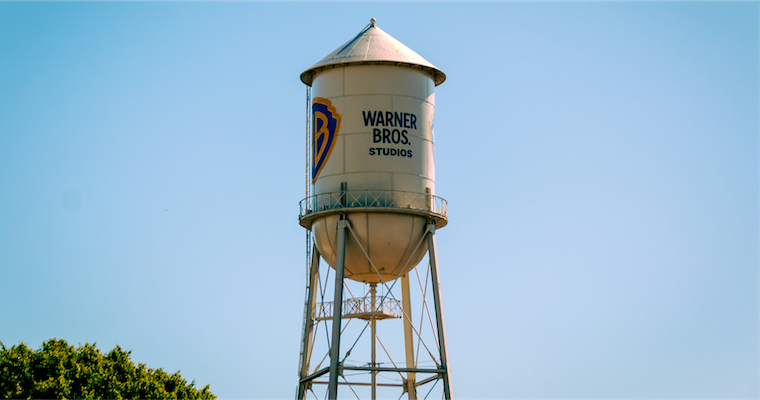
A Case Study in Real Time: The Pursuit of Warner Bros.
Professors Madsen and Tsay weigh in on a deal that could rewrite the script for the entertainment industry.
In the world of streaming media, the latest hit drama has more twists and turns than a detective thriller. It’s not taking place on the screen, but in meeting rooms, private negotiations, heated Congressional hearings, and the pages of the entertainment and popular press.
This drama concerns the future of Warner Bros. Like a more cutthroat version of a rom-com, the company finds itself pursued by two suitors: Netflix and Paramount Skydance. At the time of the publication of this article, it’s a cliffhanger. Nobody can predict the ending.
Tammy Madsen, professor of strategic management at the Leavey School of Business, looks at the deals through the lens of strategy.
“For any kind of M&A — because the failure rate's incredibly high, and it might even be higher in the entertainment space — the question is, where is the value creation?” Madsen says. “What specific synergies are realistically achievable, and what durable, ongoing value will the combined entity create that neither company could generate on its own?”
The answer depends on the deal.
The Strategy Behind the Deals
Netflix’s proposed deal to purchase Warner Bros. comes with a price tag of $82.7 billion. If approved, Netflix’s own shows could be housed under the same large umbrella as properties such as HBO and the DC Universe. Notably, the deal does not include legacy brand Discovery or news channel CNN, which would be spun off separately.
In the deal, Netflix focuses on the streaming media and content creation spaces. In fact, they define the competition to include not only powerhouses such as Disney, but also YouTube — a definition that helps put them under market share thresholds that would trigger antitrust concerns.
“In comparison to the Paramount offer, some analysts view the Netflix deal as more of a strategic positioning approach, and that is how Netflix has framed it." Madsen says. “The emphasis is on synergies via global streaming scale, technology integration, and aggregation of direct-to-consumer data, with a focus on long term positioning against Amazon, Apple, and Youtube. But is it a strategic fallacy?”
Netflix could enhance its own content creation by learning from the creators at HBO, for example, In turn, they can apply their own industry-leading algorithm and data science to improve the reach of newly acquired brands. Exactly how this would work — particularly in terms of brand independence vs. integration — requires much more due diligence. An integration plan is vital to achieve the synergies necessary to cover the premium paid, Madsen says. Deals like AOL–Time Warner in 2001 illustrate a recurring pattern: bold strategic ambition paired with insufficient integration discipline and managerial hubris. Absent a clear plan for how value would actually be realized and operationalized, the merger’s promise unraveled.
Madsen’s colleague Andy Tsay, Leavey professor of information systems and analytics, applies his global supply chain expertise to the deal and comes to similar conclusions about potential synergies. “This isn't just a media deal,” Tsay says. “It's a supply chain redesign from script to screen.”
Back when Netflix was a DVD-by-mail startup, they operated solely on the downstream distribution side of the supply chain. But times have changed, and Netflix now operates both downstream as a storefront and upstream as a home for content creation. So the deal is not purely backwards integration, a distributor purchasing a supplier. To Tsay, like Madsen, the focus should be on a clear plan for operations.
“Mergers do not automatically create value,” he says. “Process changes and operational execution do.”
The plot thickens when Paramount Skydance enters the scene. After weeks of Netflix dominating the news, Warner Bros. reentered talks with Paramount this month. Paramount has presented a $108.4 billion hostile takeover bid. Notably, the deal would include all legacy properties, including CNN.
Unlike Netflix, Paramount sits clearly in the same media space as Warner Bros, making any supply chain benefits a bit less clear. “They have a different history, a different culture,” Tsay notes. “I don’t doubt that they have their own data analytics people and tools for understanding market intelligence, but I don’t think there’s a bigger name than Netflix for that sort of work.”
Madsen adds that the intent is less clear in the Paramount deal, as is the future.
“Are they acting more like a private equity firm? Are they going to come in and just unbundle everything and sell it off for parts,” she wonders. “Or are they going to inject funding into this venture to try to improve the organization?”
The Consumer Perspective
To the average person flipping through apps on their TV at home, the ins and outs of each deal probably matter less than two simple questions: Can I still watch my favorite shows? Will they cost more?
The answer to the first question is probably. The answer to the second is maybe.
Consolidation can lead to convenience. Streaming media is a fragmented world. To keep up with favorite shows and movies, one needs multiple subscriptions and apps. Consolidation may mitigate that concern slightly. It comes with potential drawbacks, though, including fewer options for upstream creators to “shop around.”
“Consolidation often puts resilience at risk if not done thoughtfully,” Tsay says. “Consolidation can reduce redundancy, with fewer alternative buyers and fewer parallel pipelines, which can make the overall ecosystem more fragile when shocks occur.”
Such concerns are about competition and innovation, Madsen adds. “If Netflix accumulates substantial bargaining power and exerts excessive pressure on content creators, they risk dampening the innovation that fuels the industry,” she says. “Fewer independent creative bets ultimately reduce the variety and long-term value of content. Consolidation may improve efficiency in the short term, but over time it can reduce creative diversity, weaken supplier bargaining power, and ultimately give the platform greater control over pricing for both advertisers and consumers.”
In the not-so distant future, a user might find themselves logging into one portal to access everything from Stranger Things to The Sopranos to The Batman. What shape that takes, what the brand name is, how much it will cost, and whether the experience will include ads remains to be seen.
Viewers and business analysts alike will tune in eagerly to find out.