Top Stories
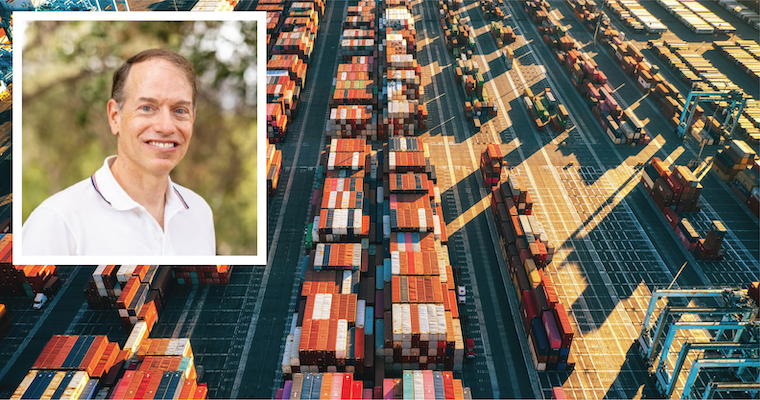
Leavey Professor Kris Mitchener Analyzes Current Tariffs Through Historical Lens
As we pass the six-month mark of President Trump’s second administration, one theme has remained constant: tariffs. On April 2, 2025, the White House announced reciprocal tariffs on all 186 members of the World Customs Organization - an unprecedented move that stunned global markets and reignited fears of renewed protectionism. It was only the beginning.
Since that announcement, President Trump has leaned heavily on tariffs as a go-to policy lever, often deploying them in response to diplomatic disputes or economic disagreements with both allies and adversaries. The result is a dramatically more volatile trade environment, and growing uncertainty for businesses, investors, and households.
“History doesn’t repeat itself, but it rhymes,” says Kris Mitchener, Professor of Economics at the Leavey School of Business, invoking Mark Twain. And in the current moment, Mitchener sees alarming parallels to the 1930s: rising protectionism, retaliatory tariffs, and the weaponization of economic policy.
“We’ve entered an era where countries are using their economies not just to grow, but to punish or pressure,” he explains. “It’s not just trade barriers, it’s currency manipulation, export controls, restrictions on investment. It’s a different playbook than what we've seen in the post-WWII order.”
Mitchener points to Trump’s first term, where tariffs on steel, aluminum, and Chinese goods sparked immediate retaliation from allies and rivals alike. But today’s tariffs are even broader and, in his view, more dangerous. The global economy is far more interconnected now than it was even a decade ago. Disruptions to trade don’t just hit import prices, they rattle supply chains, affect loan rates, and increase uncertainty across the board.
“We are living through a period of heightened uncertainty,” he says. “Businesses don’t know what input costs will look like in six months. Households don’t know if consumer goods will get more expensive. That uncertainty delays investment and weakens growth.”
One of the key lessons from his historical work is that trade wars are rarely won. In fact, countries that start them often end up worse off. “Retaliation is strategic,” Mitchener explains. “In the 1930s, other countries hit back at U.S. industries that were iconic - cars, Hollywood films. Today, we’re already seeing retaliation targeted at agriculture and other politically sensitive sectors.”
This tit-for-tat escalation, he warns, won’t just affect multinational corporations. Tariffs are taxes, plain and simple. Whether the costs are passed on to consumers in the form of higher prices, or absorbed by businesses through lower profits, they create economic drag.
“There may not be a surge in inflation, but we could see a one-time spike in prices,” Mitchener says. “And those price changes trickle through the system, to the interest rates on car loans, mortgages, and student debt.”
So, what should the average American take away from all this? First, don’t assume a trade war will stay confined to headlines or boardrooms. “These things reach into every part of the economy,” Mitchener says. “They affect what you pay at the store, what jobs are available, even how stable your financial future feels.”
Second, he urges policymakers and the public alike to learn from the past. “The lesson from Smoot-Hawley and other historical episodes isn’t that tariffs never work, but that widespread, escalating trade wars are almost always harmful,” he says. “If we don’t remember that, we risk repeating the same mistakes.”
Finally, Mitchener’s message is one of vigilance. We may not be able to predict exactly how the next few years will unfold, but we should be paying close attention. “There’s no crystal ball,” he says. “But we can look to history as a guide, and right now, that guide is flashing some serious warning signs.”