Olivia Glaser: Two Lessons from My Time at the Office of Economic Development
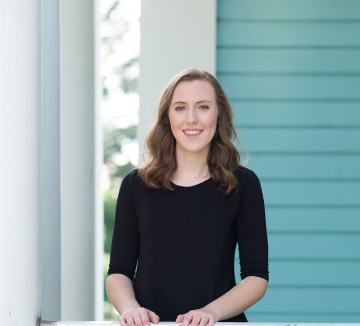
Coming into my senior year at SCU, I had what felt to me like fairly extensive experience working at different types of nonprofit organizations––from my high school’s foundation raising money for student scholarships, to a public art museum, and a nonprofit focused bringing joy to terminally ill children where I had worked respectively in donor outreach, curatorial duties, and data analytics. With this background, I can certainly say that the Office of Economic Development is unlike any traditional nonprofit organization I have worked for, but it is still at its core focused on serving and empowering the surrounding San Jose community. In this way, my experience expanded my entire conception of community service and involvement––in my work at the OED, I have found an intersection of community involvement and economics, a space that I did not previously know existed so robustly as it does, nor did I anticipate how vital this work is to the residents of San Jose. From my time at San Jose, I have learned 2 lessons that are critically helpful as I prepare to enter my professional life after SCU.
The first lesson I learned is the importance of grounding yourself and your work in the context of a larger mission you believe in: even taxing work is worth it when you believe in why you’re doing it. What I think makes OED work so particularly important is its core mission––to make the city a better place to live for its residents, to drive economic growth while maintaining the city’s cultural diversity and history. And what makes the OED team so particularly special is how much they have grasped onto this mission as the core motivation for their work, I’ve observed it gives them energy and enthusiasm for even tangentially related tasks. Any line of work can have its low moments, but by reframing even your day-to-day action items in the context of your larger mission and goals––one you believe is worth pursuing––even the lowest moments are more bearable because you know that you are having a positive impact on your community.
The second lesson, tied to this first one, is that community impact work doesn’t only happen at nonprofit organizations. While the nonprofit organizations in the Bay Area and around the world certainly do some of the most important humanitarian work, it is a great disservice to suggest that this is the only space where positive community impact can happen. While my work at the OED has not always seemed directly related to positive impact, I’ve actively worked with my supervisor to find opportunities and projects within the scope of my business outreach position that do more clearly seek to serve and benefit the San Jose community.
When I accepted a full-time corporate job upon graduation from SCU this spring, I had reservations about my ability to remain motivated and fulfilled by a position that didn’t seem to be clearly or exclusively focused on helping others. Rather than accepting this reality, I have learned through my time at the OED that I still can and should seek out creative ways to have a positive community impact within the scope of my work life––whether working on a pro-bono case or developing a partnership between my company and a local nonprofit to raise money for important causes. Moreover, in pursuing these ways to merge my work with my passion for service and community-based work, I can ground myself in a core, motivating mission that makes my job more valuable and meaningful to me.
I am eternally grateful to the LSB Community Fellows Program, and to all my supervisor and colleagues at the OED, for making this such a wonderful and insightful professional experience. I am excited to see what other lessons I learn in these final months as a Fellow!