What Is Market Research? Key Types, Methods, and Examples

Key Takeaways
- Market research is the process of collecting and analyzing information about customers and competitors so that a business can make evidence-based decisions.
- Research is classified by where the data comes from (primary or secondary) and by the kind of data it produces (qualitative or quantitative).
- Common methods include surveys, interviews, focus groups, and experiments such as A/B tests, while many research projects can be organized into five broad steps.
- Research skills support careers in market research and brand management, and BLS expects analyst jobs to grow much faster than average through 2035.
Before a company commits money to a new product or a new market, its leaders have to answer a basic question: will anyone actually want this? A wrong guess can leave a warehouse full of unsold inventory or a sales team pitching an offer customers ignore.
Market research is how businesses answer that question with evidence. Surveys and focus groups are familiar examples, but the work extends well beyond either method. Understanding what market research includes makes it easier to judge which findings are useful for a particular decision.
What Is Market Research?
Market research is the process of collecting and analyzing information about a market, including the customers in it and the competitors serving it, to guide business decisions. In simple terms, it's how a company learns what customers want before it commits money to a plan.
Under that market research definition, the work answers five practical questions: who the customers are, what they need, what they'll pay, how they choose between options, and how competitors position themselves. Explaining why customers choose the way they do often draws on behavioral economics, which studies the shortcuts people use when they decide, such as anchoring on the first price they see or sticking with a default option.
Why Market Research Matters

Launching a product or setting a price on instinct alone means betting the budget on assumptions. Research replaces those assumptions with evidence, which helps in several ways:
- Lower risk of expensive product and campaign failures, because weak ideas get caught before launch.
- New opportunities, as research surfaces unmet needs and gaps competitors have missed.
- Sharper targeting and pricing, since messages and price points can be tested with customers first.
- An early read on change, as tracking studies show how customer expectations and market trends move over time.
- Stronger leadership decisions, because executives can weigh evidence alongside instinct.
Coca-Cola's 1985 formula change is one of the best-known market research examples. The company replaced its 99-year-old formula with a new recipe after nearly 200,000 consumers favored it in taste tests. According to the company's own history, those tests measured taste and missed the bond people felt with the original. Seventy-nine days after the launch, the original formula returned as Coca-Cola Classic.
Intuit, now headquartered in Mountain View, shows the payoff. In its early years, employees waited in stores for someone to buy Quicken, then asked to watch the new customer set it up at home, a practice the company called Follow Me Home. The same habit of listening later showed Intuit that entrepreneurs were adapting the personal finance program to run their companies, and it built QuickBooks for them.
Types of Market Research
Research types sort along two lines: where the data comes from and what kind of data it is. Based on that, the main types are:
Primary market research
Primary market research is original data a company collects directly from its own market, through methods such as surveys and interviews. It can answer a company's specific question with current information, although collecting it often requires more time and resources.
Secondary market research
Secondary market research uses data someone else has already collected, such as government statistics, industry reports, academic studies, and published analyses. It can be faster and less expensive to obtain, although it was originally collected for another purpose.
Qualitative vs. Quantitative research
Qualitative research explores why people behave as they do, using open-ended conversations with small groups. Quantitative research measures how many people think or act a certain way, using numeric data from larger samples that can be tested statistically. Strong research programs use both: qualitative work suggests what might be true, and quantitative work tests how widely it holds.
Common Market Research Methods
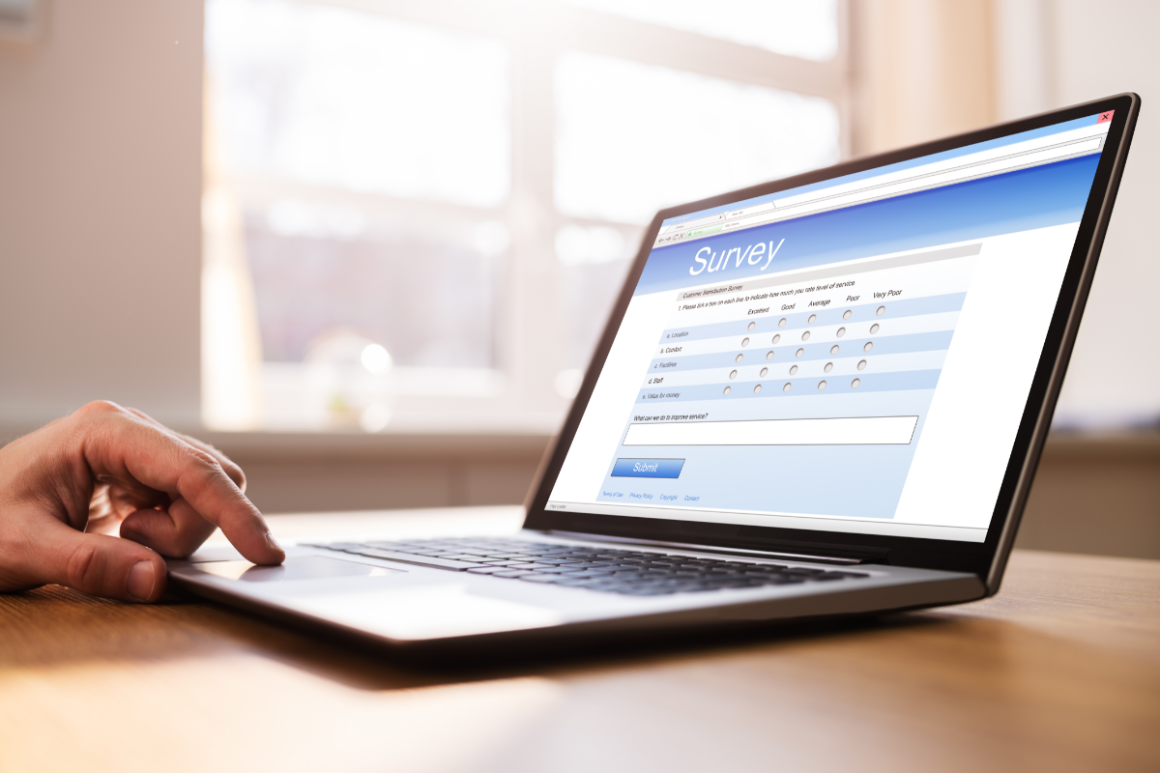
Researchers usually choose among seven families of market research methods, each suited to a different kind of question.
- Surveys and questionnaires: Standardized questions sent to a large group, usually online, so answers can be counted and compared, such as a satisfaction survey after a purchase.
- Interviews: One-on-one conversations in which a researcher can follow up and ask why, such as a call with a manager who just chose a software vendor.
- Focus groups: A moderator leads a small group through reactions to a concept or an early prototype, capturing the words customers use and the objections they raise.
- Observation and ethnographic research: Researchers watch people use a product in their own home or workplace. Intuit's Follow Me Home visits are a well-known version.
- Experiments and field trials: A/B tests and pilot launches change one variable, such as a price or an email subject line, and measure how customers respond.
- Secondary data analysis: Analysts mine existing sources such as government data, industry reports, internal sales records, and web analytics.
- Social listening and online analytics: Teams track reviews and social media posts to see how people talk about a brand or category in their own words.
| Method | Primary or Secondary | Qualitative or Quantitative | Best For | Typical Cost and Speed |
|---|---|---|---|---|
| Surveys and questionnaires | Primary | Mostly quantitative | Measuring preferences at scale | Low to moderate cost; results in days or weeks |
| Interviews | Primary | Qualitative | Understanding high-stakes decisions | Moderate cost per person; slow to scale |
| Focus groups | Primary | Qualitative | Reactions to concepts and prototypes | Moderate to high cost; a few weeks |
| Observation and ethnography | Primary | Qualitative | Seeing real habits and workarounds | Higher cost; time-intensive |
| Experiments and field trials | Primary | Quantiative | Choosing between options with real customers | Varies; online tests can run in days |
| Secondary data analysis | Secondary | Mostly quantitative | Sizing markets and spotting trends | Low cost; fast |
| Social listening and online analytics | Mostly secondary | Both | Tracking sentiment and emerging topics | Low to moderate cost; near real time |
Much of this work now runs through software. Analysts clean survey results and build dashboards with many of the same data analyst tools used across other data jobs. AI can now summarize interview transcripts or sort thousands of open-ended answers into themes in minutes, though a researcher still has to check the output. Several digital marketing trends, including AI-driven search and stricter expectations around data privacy, also affect what researchers can collect and where customers leave signals.
The Market Research Process: 5 Key Steps
If you're learning how to do market research, you'll find that most projects follow the same five-step workflow, whether the question involves a new product or a price change.
- Define the problem and research objectives: Start with the decision the research has to support, such as whether to raise prices by 10%. Coca-Cola's 1985 taste tests show the risk of a narrow question, since they answered exactly what they were asked.
- Develop the research plan: Choose the methods, sample, budget, and timeline, and decide in advance which result would change the decision.
- Collect the data: Gather the primary or secondary data the plan calls for, and check quality as responses come in.
- Analyze the data: Look for patterns across customer segments and test whether the differences are large enough to act on.
- Report findings and act on them: Turn the results into a recommendation, then measure what happens after the decision.
Versions with seven steps, which some textbooks and courses use, split the same work into finer stages, for example by separating sampling from research design or analysis from reporting.
Careers in Market Research

Market research analysts do this work full time. The latest figures for the occupation from the Bureau of Labor Statistics (BLS) show:
- Pay: a median annual wage of $78,760 in May 2025, compared with $50,980 for all occupations. The top 10% earned more than $155,480, and analysts in the information industry earned a median of $102,670.
- Job outlook: 7% projected growth between 2025 and 2035, much faster than average, with about 82,000 openings a year. BLS ties the growth to companies' expanding use of data, including social media comments and online product reviews.
- Education: a bachelor's degree, often in business or a social science field, with coursework in statistics and research methods. Some employers prefer a master's degree, and BLS notes that one is often required for leadership roles or more technical research.
- A related management role: advertising, promotions, and marketing managers, a similar occupation in BLS data, earned a median of $165,780 in May 2025.
Research experience also leads to consumer insights and brand strategy roles, along with broader marketing career paths in data analysis and product management.
At the Leavey School of Business, undergraduates in our Department of Marketing learn quantitative methods for gathering customer data and apply ethical business practices on team projects with Silicon Valley companies. Among our MS business programs, the MS in Marketing (MSM) includes core courses in Analysis of Customers and Markets and Marketing Analytics. Students can finish the MSM in person, online, or through a combination of both formats in about a year. Working professionals in the Evening MBA take Marketing Strategies and Decisions in their first quarter, with classes two evenings a week.
Turn Market Insight Into Smarter Decisions
Market research gives a business evidence to act on before it commits money. Knowing the types and methods helps you match the right tool to each question, and the five-step process keeps a project tied to the decision it's meant to inform. Companies that listen to their markets this way make fewer expensive guesses, and the analysts and managers who run that work earn well above the national median.
If you want to learn these methods through coursework and projects with Silicon Valley companies, explore our marketing and graduate business programs. The next time someone asks whether customers will want a new idea, you'll know how to find out.
Frequently Asked Questions
How long does market research take?
A quick online survey can return results within a few days, while a study that pairs interviews with a large survey across several markets can take months.
Can small businesses benefit from market research?
Yes. Free secondary sources such as U.S. Census Bureau data, along with short surveys of existing customers, let small businesses test a price or a new offering before committing money.
What makes market research reliable?
Reliable research starts with a sample that represents the customers you care about and questions worded neutrally. Findings also hold up better when a second source, such as sales data, points the same way.
Discover Your Next Step
This will only take a moment.