
Key Takeaways
- MBA careers stretch across industries—consulting, investment banking, marketing, operations, product management, and more
- Your specialization in the MBA directly shapes both your career direction and your earning potential
- Santa Clara University's position in Silicon Valley, alumni support, and values-driven leadership training give MBA grads an edge in fast-growing fields
In competitive industries, the difference between staying where you are and moving into leadership can come down to the credentials you bring with you.
Employers want people who understand strategy, can interpret complex data, and know how to guide teams through uncertainty. Those skills rarely develop by accident. That's why so many professionals pursue MBA programs, recognizing that advanced training can expand their options and strengthen the expertise they already have.
The question, of course, isn't whether an MBA matters, but how exactly it shapes the paths available to you. To answer that, it is helpful to look at the options of MBA careers and understand the kinds of roles this degree prepares you for.
Top Career Paths With an MBA
There are many directions you can take with an MBA. Most industries benefit from professionals who understand how to analyze problems, guide teams, and make informed business decisions. Therefore, among the top MBA careers you can pursue are:
Technology and product management
Technology and product management are among the most popular options for Leavey MBA graduates, and it's not hard to see why when you're studying in the middle of Silicon Valley. The proximity gives students exposure to the companies, tools, and talent that drive the region, and many go on to roles that blend business insight with fast-moving technical work.
Product management, in particular, attracts many MBA-trained professionals. Product managers coordinate work across engineering, design, marketing, and business teams while shaping product direction and making decisions anchored in user needs and organizational goals. The speed of the tech industry makes this mix of strategic thinking, communication, and cross-functional leadership especially valuable.
Examples from our own alumni show how varied and rewarding these paths can be. Take Kristie Ramirez, for instance. She stepped into the gaming world right as she started her MBA, and pretty quickly found herself in roles where she had to coordinate teams across marketing, PR, customer experience, finance, operations—you name it.

Her take on her time at Sony Interactive says a lot about the nature of the job: "My job is to be the conduit between these groups of smart, passionate people. When we're all on the same page, magic happens." It's the kind of line you hear and think, yes, that's exactly what product work feels like.
Meir Amiel's career, as another Leavey graduate, offers another perspective on the blend of skills product leaders rely on. His path shows how product leaders have to hold both the long view and the day-to-day details at once. Now a senior executive at Salesforce, he describes his typical day as a mix of big-picture industry conversations and very hands-on operational decisions. And his perspective comes with a sense that technology is shifting again: "We are reimagining enterprise software, pushing the boundaries of what's possible with AI-driven automation." That blend of strategic insight and practical problem-solving echoes what many product roles ask for.
MBA graduates bring a business perspective that complements technical expertise, which is why tech companies across the country—including Google, Amazon, Meta, Microsoft, and many high-growth startups—regularly recruit professionals with this combination of skills. Whether working in gaming, cloud software, consumer tech, or AI-driven platforms, the blend of strategic training and hands-on collaboration prepares MBA graduates for a wide range of roles across the technology landscape.
Management consulting
Management consulting has also long been a magnet for MBA grads who like tackling complicated business issues. Consultants jump into companies across industries to help them rethink operations, explore new markets, refine strategy, and improve overall performance. The work asks for sharp analysis, strong communication, and the ability to get up to speed on unfamiliar business models fast.
Firms like McKinsey, BCG, Bain, and Deloitte are well-known recruiters in this space. The path from associate to engagement manager to partner isn't quick, but the growth (and compensation) usually reflects the effort. Many consultants eventually move into high-level leadership roles at the companies they once advised, nowadays often referred to as "ex-consultant" leadership. It is a natural move for professionals who have spent years solving high-stakes problems across different industries.
Investment banking and finance
Finance remains one of the most established MBA career paths, spanning investment banking, private equity, venture capital, and corporate finance. These roles depend on the ability to analyze complex information, evaluate opportunities under pressure, and communicate clear recommendations. Analysts and associates often spend their days modeling deals, assessing market conditions, and guiding clients through decisions about acquisitions, funding, and long-term strategy.

As the industry automates more routine tasks, the expectations placed on finance leaders continue to grow. Leavey alumnus Tim Cabral has seen this evolution throughout his career. His approach captures the shift: technology can accelerate data processing, but insight still comes from people who know how to interpret the numbers. "I love to dig in, ask questions," he says—a reminder that curiosity and judgment carry even more weight as tools become more advanced.
That perspective extends to private equity and venture capital, where identifying potential often depends on recognizing patterns software can't flag. Cabral describes this as finding "non-obvious value," a skill sharpened through experience, mentorship, and rigorous training. His own MBA helped build that foundation: "I would learn something in class on Tuesday night and apply it to my job on Wednesday."
For students drawn to this direction, a finance-focused MBA offers preparation for roles where analytical rigor meets strategic decision-making, and where human judgment remains essential, no matter how much the tools evolve.
Marketing and brand management
MBA graduates heading into marketing often step into roles such as brand manager, marketing strategist, or product marketing lead. These positions blend creativity with analytical judgment, as companies increasingly use data to understand consumer behavior, refine messaging, and measure campaign effectiveness.
Organizations across sectors—FMCG brands, technology firms, retail companies, and even emerging startups—rely on MBA-trained marketers to shape product stories in a way that resonates with audiences. Their work influences everything from how a product is positioned in the market to how loyalty is built over time. Because marketing decisions directly affect revenue, outcomes are usually tied to ROI, market share, and customer lifetime value.

The field suits graduates who enjoy thinking about why people buy what they buy but also want to anchor those insights in strategy. It's one of the broadest MBA career paths, offering room to move between industries or take on cross-functional roles where marketing, analytics, and product strategy overlap.
Operations and supply chain management
Another direction MBA graduates take is operations and supply chain management, a field focused on the complex systems that support everything from production to delivery. As Leavey alum Jasmine Ni explains, "People tend to focus on the last leg… but what they don't see is the entire upstream process." That upstream process includes forecasting, planning, sourcing materials, and managing risks that shape how efficiently products move around the world.
Graduates specializing in this area often take on roles such as operations manager, supply chain director, or program manager. Companies like Amazon and major tech firms depend on professionals who can balance immediate logistical challenges with long-term planning. Ni's work as a Supply Chain Program Manager at Google reflects this balance—her days shift between solving urgent issues and the ongoing cycle of "analyzing data, refining supply chain processes, and collaborating with cross-functional teams."
Even small improvements, like adjusting shipment consolidation or reducing excess inventory, can create meaningful financial and environmental benefits. That sense of visible impact is one reason many MBA graduates find the field appealing. Ni credits her preparation to case-based coursework and a cohort that brought multiple industries into one room. Her path—from Oracle to ServiceNow and now Google—shows how widely transferable these operational skills can be.
Entrepreneurship and startups
Entrepreneurship appeals to MBA students who feel pulled toward building something of their own. An idea, a technical skill, or a problem worth solving becomes the starting point, and the MBA provides the structure around it—how to test an assumption, shape a business plan, understand the market, and pitch a vision in a way that others can believe in. For many founders, those tools turn early-stage ideas into something that can actually grow.
That combination of curiosity and discipline is clear in the path of our alumnus Prashant Maniar. After years in Silicon Valley, surrounded by emerging technologies and founders experimenting with clean tech, he found himself drawn toward climate-focused innovation. Those experiences eventually shaped Encito Advisors, the investment firm he leads today. Maniar describes their philosophy simply: the firm "plays the infinite game by taking a long-term portfolio approach to climate action," a mindset that prioritizes meaningful solutions over quick wins.

His story reflects a broader truth about entrepreneurship today: ideas travel globally, but impact happens locally. MBA programs reinforce that balance, encouraging students to look outward—at markets, industries, and technologies—while grounding their decisions in the needs of the communities they hope to serve.
Ethics also sits at the center of Maniar's work, and his take resonates with many modern founders: "Unless you take the high road, what's the point of climate action? You can't do clean stuff in a dirty way." It's a reminder that entrepreneurship isn't only about building fast—it's about building with intention. And in environments rich with mentors, accelerators, and investors, MBA graduates have the support they need to bring thoughtful, responsible ventures to life.
Emerging MBA Career Trends
As companies adapt to changing markets and technologies, MBA career paths are branching into areas that align with these new priorities. Many students now gravitate toward fields shaped by today's biggest shifts—climate concerns, healthcare complexity, and the explosion of data.
Sustainability and ESG (Environmental, Social, and Governance) roles appeal to those who want business decisions to reflect long-term responsibility. Healthcare consulting attracts graduates who see opportunities to streamline systems and improve access to care. Others move toward data strategy, where the challenge is turning enormous amounts of information into decisions that actually guide a company forward.
Instead of separating technical work from business decision-making, many organizations now want people who can move comfortably between the two. An MBA that integrates technology into its core courses prepares graduates for exactly that kind of work—roles where you're asked to understand the tools shaping the industry and use them to make better decisions, not become a technician.
Therefore, what ties these emerging paths together is less the industry and more the mindset. The graduates who thrive in the coming decade will be the ones who pair strong functional skills with curiosity, ethical judgment, and the willingness to keep learning as the world around them shifts.
Factors Influencing Career Success After an MBA
An MBA may open doors, but the momentum that follows usually depends on how students use the experience while they're in the program. The relationships built in classes and group projects often become the first source of introductions and job leads. Many students discover that conversations with peers, faculty, or alumni point them toward opportunities they might not have considered on their own.
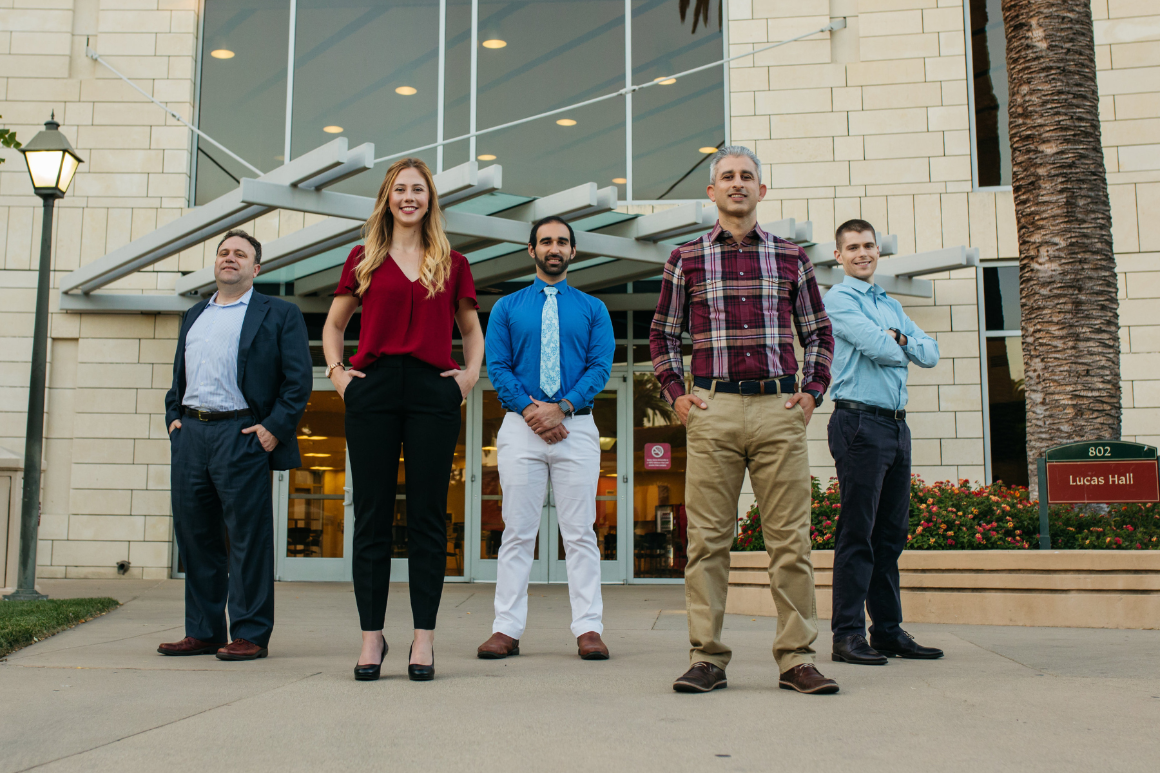
Where you study influences what you're exposed to. Programs located near active business hubs give students regular contact with employers, industry speakers, and recruiters. Those interactions make it easier to understand how different companies hire and what they look for. Over time, students begin to refine how they present their skills and goals, which often matters just as much as technical qualifications.
Naturally, past experience still plays a role in determining which paths feel accessible, but the abilities that carry graduates forward tend to be broader: communicating clearly, leading teams, interpreting problems, and adjusting quickly as expectations change. Students who test ideas early, make use of internships, and stay engaged with their networks generally leave with a stronger sense of direction.
Turning Your MBA Into a Launchpad for Success
An MBA degree does not funnel graduates into a single "business" lane. Instead, it opens doors across consulting, finance, marketing, operations, technology, and entrepreneurship. Whatever direction you're drawn to, there is space to build a meaningful, well-rounded career with the foundation an MBA provides.
Santa Clara University's Leavey School of Business builds on that range of possibilities. With flexible options—including Online, Evening, and Executive MBA programs—Leavey prepares students to grow into leaders who combine technical fluency with thoughtful, purpose-driven decision-making. For those who want deeper specialization, the M.S. programs in Business Analytics, Finance and Analytics, Information Systems, Marketing, and Sports Business offer pathways into high-demand fields shaped by data and digital innovation.
Paired with the proximity to Silicon Valley, students also benefit from one of Leavey's greatest strengths: its alumni community. Graduates working in different industries can become an ongoing source of guidance for our students.
With the right MBA, you leave the program with more options and more direction regarding the future you want to build.
Frequently Asked Questions
What is the difference between an MBA and an Executive MBA (EMBA)?
An MBA typically serves early- to mid-career professionals with a few years of experience. An EMBA is geared toward senior leaders with 10+ years under their belt and usually comes in a format designed to fit full-time work.
Can I switch industries after completing my MBA?
Yes. Many MBA grads successfully pivot to different industries, especially when they use internships and networking during the program to build experience in their target field.
Discover Your Next Step
This will only take a moment.