Cultural and Social Guides
For many international students, adjusting to American culture can be difficult and at times frustrating. American customs and values might be very different from those of your home country, and you might find them confusing. You will probably want to familiarize yourself with American culture before your departure, in order to make the transition as easy as possible.
Further Reading
Stages of Culture Shock & Adaptation
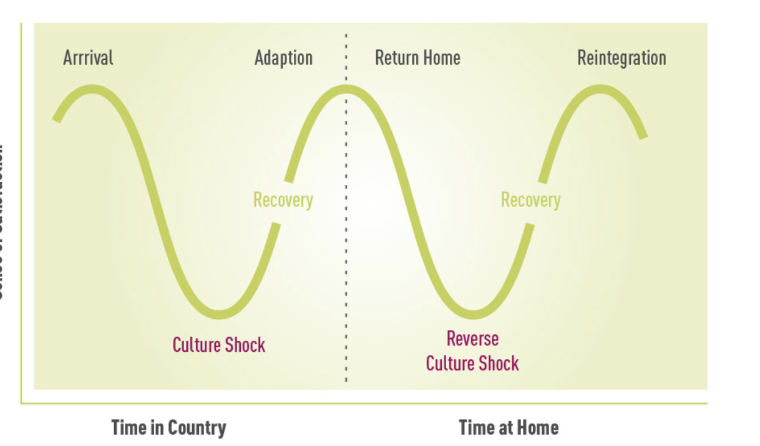
Culture shock generally moves through four different phases: honeymoon, frustration, adjustment, and acceptance.
Stage 1: Honeymoon Phase
What is the Honeymoon Phase?
The first stage of culture shock that many international students experience when they move to a new country. During this phase, everything about the new culture feels exciting, interesting, and fun. You might feel like you're on vacation! You’re loving the adventure!
What You Might Feel:
- Excited to explore the new place
- Curious about local food, traditions, and people
- Happy to meet new friends and try new things
- You might even feel like everything is better than at home
SCU Resources
- Student Clubs & Organizations – Find a community based on your interests—cultural, academic, service, and more
- GBP Student Clubs (SCU Login Required) – Attend events and mixers designed to build community among grad students
- Multicultural Center (MCC) – Join cultural affinity clubs and attend events that celebrate global traditions
- Campus Recreation – Explore fitness classes, hiking trips, and outdoor adventures through the Rec Center
Stage 2: Crisis Phase
What is the Crisis Phase?
Students may experience homesickness, culture shock, and frustration as they navigate unfamiliar norms and adjust to a new environment. Emotional ups and downs are common during this challenging but temporary stage. That’s totally normal—it’s part of adjusting.
What You Might Feel:
- Homesick – missing your family, friends, food, or routines from home
- Frustrated – struggling with language, accents, or unfamiliar systems
- Lonely – feeling like it’s hard to make deep connections
- Confused or overwhelmed – trying to navigate cultural norms, social cues, or even simple tasks like grocery shopping or public transit.
- Irritated – small things may feel harder or more annoying than usual—this is often a sign of internal stress.
- Worried – concerns about visas, finances, academics, or future career opportunities might feel heavier during this time.
Tips for Coping:
- Talk to someone – friends, family, or a counselor
- Join clubs or activities – to meet people and feel connected
- Keep a routine – it brings stability
- Stay curious – ask questions about things you don’t understand
- Be kind to yourself – adjusting takes time
SCU Resources
- CAPS Counseling Services – Free and confidential counseling for SCU students
- Campus Ministry & Interfaith Resources – For spiritual or community-based support
You’re not failing—you’re adjusting. The crisis phase is a sign that you’re stretching outside your comfort zone, and that growth is happening. Reach out, stay connected, and give yourself the time and space to adapt. Santa Clara is full of people and places ready to support you.
Stage 3: Recovery & Adjustment
What is the Recovery & Adjustment Phase?
In this phase, international students begin to feel more at home as they adapt to new routines, cultural norms, and academic expectations. Social circles expand, confidence grows, and a sense of belonging starts to take root—marking a shift from surviving to thriving in their new environment. You're not just surviving — you're starting to thrive!
What You Might Feel:
- More confident navigating daily life
- Comfortable with local customs and routines
- Connected through growing friendships and support networks
- Relieved as challenges begin to feel more manageable
- Optimistic about their experience moving forward
- Empowered by their ability to adapt and thrive
Tips to Keep Growing:
- Stay open-minded – keep learning and asking questions
- Make deeper connections – build real friendships
- Celebrate progress – every little success matters
- Find balance – mix your culture with the new one (like cooking your home food with new friends!)
Local Laws & Customs
Listed below are key California regulations that may be helpful during your stay. We encourage you to explore further resources (e.g. California legislative information) to ensure you are well-informed and prepared.
Alcohol Laws
California alcohol laws regulate the legal drinking age, where alcohol can be purchased or consumed, and penalties for underage drinking or driving under the influence.
- Public Intoxication: California Penal Code Section 647(f) makes it a crime to be drunk in public to the degree that one is unable to care for oneself or others.
Driving Laws
The California Driver Handbook offers important information on how to obtain a California driver’s license, navigate roadways, understand traffic laws, and more
- Littering: California Vehicle Code Section 23111 prohibits throwing any burning or non-burning material from a vehicle
Public Smoking & Vaping Restriction
It's important to understand and comply with the state's comprehensive smoking and vaping regulations, which aim to protect public health and maintain clean environments.
Animal Laws
California animal laws cover pet ownership, wildlife protection, and animal cruelty prevention. They include strict regulations on exotic pets, dog leash laws, and vaccination requirements. There are also rules on humane treatment and banned animal-related activities. Whether you're bringing a pet from abroad or interacting with animals locally, understanding these laws will help you stay compliant in California.
- Animal Control Services: For issues like roaming dogs, noise complaints, or animal-related nuisances, residents in cities served by the Silicon Valley Animal Control Authority (SVACA) can submit online reports or call (408) 764-0344.
Noise Complaints Law
It's important to be mindful of local noise ordinances, which are designed to maintain a peaceful living environment. California cities have specific laws regarding noise, including quiet hours, sound levels, and permissible activities.
English Language Resources
Explore resources, tutoring, and workshops to help you grow your English skills. Perfect for academic success, daily conversations, and feeling more confident in your new environment.
Santa Clara University Resources
- iExchange matches new international students with volunteer SCU faculty and staff members to provide informal social and cultural interaction opportunities and activities throughout the student’s first academic year. The program is not a typical “buddy program” which pairs international students with local students, nor is it a “home-stay” program.
- The HUB Writing Center provides assistance with various writing projects, such as essays, research papers, and lab reports, at any stage of the writing process. They also offer workshops on public speaking, revising and editing, developing personal statements and cover letters, grammar basics, and writing for non-native English speakers.
Santa Clara County Resources
- Santa Clara County Library District ESL Classes & Conversation Clubs
- Santa Clara County Library District Resources
- Santa Clara City Library ESL Programs & Online Resources
Other Online Resources
General English Learning Resources
- BBC Learning English (free) helps learners improve their English through videos, quizzes, and interactive lessons. It offers courses for all levels, from beginner to advanced, covering grammar, vocabulary, pronunciation, and listening skills. The site also features news-based lessons like The English We Speak and News Review, as well as content focused on business and academic English.
- Duolingo (free & paid) helps users learn new languages through fun, game-like lessons. It covers reading, writing, listening, and speaking skills, making it great for beginners or anyone wanting to practice a language. For international students learning English, Duolingo offers short daily exercises that build vocabulary and grammar step by step. It's available as a mobile app or on the web, and you can learn at your own pace.
- Memrise (free & paid) focuses on building vocabulary and real-life conversational phrases through fun, interactive lessons. It uses spaced repetition, videos of native speakers, and gamified quizzes to help users remember words and phrases more effectively.
Academic English & University Prep
- Purdue OWL (free) provides guidance on academic writing, citation styles, and grammar. It offers detailed instructions for properly formatting papers and citing sources in various styles, such as APA, MLA, and Chicago. Whether you're working on research papers, essays, or other academic projects, the OWL helps ensure your writing adheres to the conventions of scholarly writing.
- Cambridge English (free) offers a wide range of resources to help students prepare for English language exams like IELTS, B2 First, and others. Their website provides official practice tests, study materials, and tips to enhance exam readiness and improve English proficiency. Additionally, it offers academic study guides to support learners in their academic pursuits.
Speaking & Listening Practice
- TED Talks + transcripts (free) offer insightful presentations on various topics, helping improve listening skills and expand academic vocabulary. With accompanying transcripts, learners can easily follow along, study new words, and enhance comprehension while staying informed and inspired.
- Elllo.org (free) offers over 3,000 free listening lessons suitable for all proficiency levels. Each lesson features audio or video, transcripts, vocabulary support, and interactive quizzes, covering a wide range of topics and accents. This resource is ideal for enhancing listening comprehension and expanding vocabulary through engaging content.
- italki or Prepl (paid) are platforms where you can find tutors for personalized 1-on-1 language practice. Both offer paid lessons with native speakers, allowing you to improve your speaking, listening, and overall language skills through conversation. These platforms cater to various languages and provide flexibility in scheduling, making them ideal for learners who want tailored lessons and real-time practice with professional tutors.
Grammar & Writing Support
- Grammarly (free & paid) helps improve your English by checking grammar, spelling, punctuation, clarity, and tone. It offers real-time suggestions and works as a browser extension, desktop app, or mobile keyboard. The free version covers basics, while the premium version adds advanced features like vocabulary tips and plagiarism checks—perfect for students looking to write more clearly and professionally.
- Hemingway Editor (free & paid) is a tool designed to simplify and improve the readability of your writing. It highlights complex sentences, passive voice, and unnecessary adverbs, offering suggestions to make your writing clearer and more concise. The app also provides a readability grade, helping you gauge how accessible your text is to different audiences. It's an excellent resource for improving writing style and making content more engaging and easy to understand.
- The British Council's Learn English (free & paid) platform provides resources in grammar explanations, writing practice, interactive games, and exam preparation materials. These materials are designed to enhance listening, reading, writing, and speaking skills, suitable for learners at various proficiency levels. They offer paid courses such as the English Online subscription plans, which include live classes and personalized tutoring.