About Our Fellows
Our Michael A. Santoro Artificial Intelligence, Business Ethics, and Human Rights Lab fellows collaborate to form a dynamic group united through their shared passion for business ethics.
Director & Founder
Michael Santoro
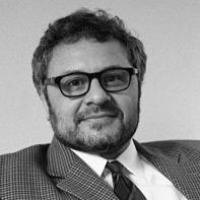
Michael A. Santoro is Professor of Management and Entrepreneurship at the Leavey School of Business at Santa Clara University, where he founded and directs the Artificial Intelligence, Business Ethics, and Human Rights Lab. A leading scholar of AI governance and accountability, he has developed an upstream-design framework that locates responsibility for AI systems in the architecture of institutional decision-making. He applies that framework across business education, the legal profession, healthcare, financial markets, military operations, public administration, and international human rights.
His recent scholarship appears in the American University Law Review, the Journal of Human Rights, the American Journal of Bioethics, Philosophy & Technology, Philosophy of Management, and the Journal of Human-Technology Relations. His co-authored study of machine learning and racial bias in medical appointment scheduling, published in Manufacturing & Service Operations Management, received both the MSOM Best Paper Award and the INFORMS Minority Issues Forum Best Paper Award. He writes regularly on AI policy for Tech Policy Press, the Modern War Institute at West Point, ProMarket (the Stigler Center at Chicago Booth), Columbia Law School's Blue Sky Blog, AACSB Insights, and the South China Morning Post, and he writes the column The Fair Shake for Psychology Today.
His applied work puts these ideas into practice. He co-directs Santa Clara's AI and Health Care Justice Lab and advises public institutions and nonprofit organizations on AI governance, including the Black Women's Health Imperative. With colleagues and student researchers at Santa Clara, he developed the AI Provenance Assistant, which searches multilingual records to identify artworks potentially looted during the Nazi period. NPR's All Things Considered featured the project in 2026. He also advises a joint project of the AI Incident Database, MIT FutureTech, and Arcadia Impact on measuring AI incidents in safety-critical domains. He has advised an IEEE standards initiative on implementing the European Union AI Act, and he founded Santa Clara's AI and Human Rights Speaker Series.
Professor Santoro co-founded the Business and Human Rights Journal (Cambridge University Press) and served as its Co-Editor-in-Chief from 2014 to 2022. He is now co-editing special issues on artificial intelligence for that journal and for the Journal of Human Rights. He was the co-founder and first President of the Global Business and Human Rights Scholars Association and served on the editorial board of Business Ethics Quarterly for two decades. His books include A China Business Primer: Ethics, Culture, and Relationships (Routledge, with Robert Shanklin), Wall Street Values: Business Ethics and the Global Financial Crisis (Cambridge, with Ronald J. Strauss), China 2020 (Cornell), Ethics and the Pharmaceutical Industry (Cambridge, co-edited with Thomas M. Gorrie), and Profits and Principles: Global Capitalism and Human Rights in China (Cornell). Pragmatism and Business Ethics (Cambridge, with Robert Shanklin) is under contract.
His work has long reached beyond the academy. In 2000 he testified before the U.S. Senate Finance Committee on the human rights implications of China's WTO accession. As an expert in corporate governance, he helped design the reforms Merck adopted after the Vioxx litigation, including the appointment of its first Chief Medical Officer, and he gave expert testimony on governance reforms at Wells Fargo.
Before joining Santa Clara in 2016, he taught for two decades at Rutgers Business School, where he was named Professor of the Year in the MBA program. He also taught at the Harvard Kennedy School and was a Research Associate at Harvard Business School. He has held visiting appointments at the University of Notre Dame, the Shanghai Advanced Institute of Finance at Shanghai Jiao Tong University, and the University of Zurich. He holds a Ph.D. in Public Policy from Harvard University, an M.P.A. from the Harvard Kennedy School, a J.D. from New York University School of Law, and a B.A. from Oberlin College, where he was elected to Phi Beta Kappa. He was a Fulbright Fellow at the University of Hong Kong.
Fellows
Tova Ricardo
Tova Ricardo is an MBA candidate at Santa Clara University, where she serves as a Research Assistant and Lab Fellow in Dr. Michael Santoro's Artificial Intelligence, Business Ethics, and Human Rights Lab. In this role, she examines the intersection of artificial intelligence and neurodegenerative care, exploring both the technological potential and ethical considerations of using AI to manage and treat conditions such as Alzheimer's disease and dementia. Her work in this space addresses pressing questions about how new technologies can responsibly support patients, caregivers, and healthcare providers navigating these complex conditions.
Ricardo's work also extends to critical issues in healthcare equity, including long-term disparities in access to care and the impact of unpaid, generational caregiving amongst older Black women in the US. Additionally, she studies the effects of prolonged isolation and loneliness on elderly male populations.
Bringing working experience in nonprofit organizations, community engagement, and healthcare fields, Ricardo looks forward to analyzing how to bridge the gap between emerging technologies and equitable healthcare access, ensuring that innovations in AI and health policy are designed with the needs of underserved populations at the forefront.
Read the current draft of her work for the lab on SSRN.
Jacob Ensminger
Jacob Ensminger is a Fellow in the Artificial Intelligence, Business Ethics, and Human Rights Lab and a candidate for the M.S. in Marketing at Santa Clara University, where he earned his undergraduate degree in finance in 2026. A 6-foot-9 guard/forward from Ulm, Germany, he is a mainstay of the Santa Clara men's basketball team. He was named to the West Coast Conference All-Freshman Team and helped lead the Broncos back to the NCAA Tournament.
In the lab, Jacob is working with Professor Santoro on how artificial intelligence can transform sports analytics, a project that asks what happens when AI becomes the analyst. The project focuses on the scouting report. It evaluates how traditional reports are built and tests whether AI can produce sharper, more reliable alternatives. It also takes up the questions of judgment and accountability that arise when machines take on analytical work long done by coaches and scouts. Jacob brings an insider's understanding of how those decisions are actually made, drawn from a lifetime in the game that began with youth basketball under his father, former Valparaiso star and longtime European professional Chris Ensminger.
Brewer D. Stone
Brewer D. Stone is a researcher and writer in the Artificial Intelligence, Business Ethics, and Human Rights Lab. He holds a degree in International Relations from the University of St Andrews, where he focused on energy geopolitics, Asian security and development, and emerging technology governance. His dissertation examined energy leverage and structural power in the Russia–Ukraine relationship and in China's energy transition strategy. He brings the same structural analysis to questions of AI governance and international regulation.
With Professor Santoro, Brewer co-authored "Artificial Intelligence, Human Rights, and the Future of Work: Global Governance and International Organizations in the Age of AI," a peer-reviewed article in the Journal of Human Rights (2026) on the governance architecture for AI and human rights. They presented the work at the 2026 European Business Ethics Network Annual Conference in Rennes, France. They have also published "AI at Work Is a Global Governance Stress Test" on Columbia Law School's Blue Sky Blog.
A second co-authored paper is under review, and Brewer and Professor Santoro are now writing a book together for NYU Press.
Nicole L. Crane
Nicole L. Crane is an MBA candidate at the Leavey School of Business at Santa Clara University and a Fellow in the Artificial Intelligence, Business Ethics, and Human Rights Lab. In the lab, she is working with Professor Santoro on ILO Convention No. 193 on Decent Work in the Platform Economy, examining how workers' rights can be protected in practice once algorithms allocate work, set pay, and deactivate accounts. She brings 15 years of experience in healthcare and life sciences, where she led commercial operations across medtech, biopharma, and diagnostics.
Haritha Muthukumar
Haritha Muthukumar is a J.D./M.B.A. candidate at Santa Clara University and a Fellow in the Artificial Intelligence, Business Ethics, and Human Rights Lab. Her studies focus on corporate law, emerging technology, and sustainable business practices, and she is particularly interested in how emerging technologies reshape corporate strategy, business operations, and sustainable growth. In the lab, her research examines the expansion of AI infrastructure, particularly the growing demand for data centers and its economic, commercial, and regulatory implications.
Past Fellows
Colton Vale
Colton Vale is a Senior Associate in the ADP program at First Citizens Innovation Banking in San Francisco, with rotations in Consumer Internet & Advisory Services and in Healthcare Sponsor Finance & Global Fund Banking.
As a lab fellow, Colton co-authored "Intellectual Property Collateral and the Governance of Innovation Finance" with Professor Santoro. It was published on Columbia Law School's Blue Sky Blog in April 2026.
The article argues that as firms derive more of their value from patents, software, data, and algorithms, intellectual-property collateral has become more than security for repayment: it is a mechanism of creditor governance. Lenders use collateral rights, covenants, rescue capital, and restructuring authority. Through these tools, they increasingly decide whether innovation is preserved, transferred, or lost as firms approach insolvency. The authors draw on examples such as the Nortel and Kodak patent sales and propose three principles for responsible innovation lending: credible capital discipline, a priority on preserving innovation, and fairness and transparency in restructuring.
Sophie Mooney
Sophie Mooney is a business student at Santa Clara University. She has a deep interest in how technology, capital, and culture shape the way products are built and adopted. She has gained hands-on experience in digital marketing, content strategy, and growth operations through internships and projects. She is fascinated by how modern teams use data, creativity, and systems thinking to move faster without losing their values. In the lab, she helped develop a financial tool that lets investors gauge the strength of the guardrails that early-stage technology companies have in place. The tool gives investors a practical way to weigh responsible technology governance alongside conventional measures of growth and risk.
Isaac Nikssarian
Isaac Nikssarian is a JD/MBA candidate at Santa Clara University School of Law and the Leavey School of Business, where he expects to graduate in 2027. He earned his undergraduate degree from the United States Military Academy at West Point in 2014 and was commissioned as an Infantry Officer in the United States Army. Isaac served eight and a half years on active duty in leadership roles at the platoon, company, and battalion levels. He is currently a Major in the U.S. Army Reserve.
As a lab fellow, Isaac co-authored "The Lawyer of the Future: Ethics and Identity in the Age of AI" with Professor Santoro and Professor David Yosifon of Santa Clara Law. Published in the American University Law Review (Volume 75, Issue 6, 2026), the article examines the ethical challenges artificial intelligence poses for legal practice, emphasizing the importance of human judgment, professional responsibility, and the evolving role of lawyers as the technology advances.