Top Stories
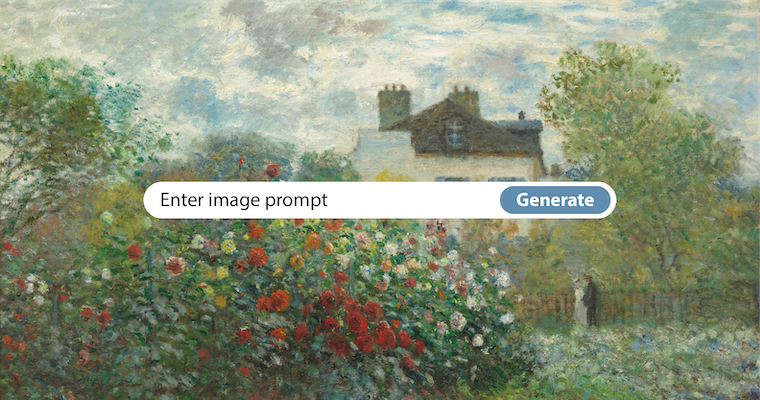
Leavey Professor Rebecca Chae Evaluates How AI is Reshaping the Meaning of Art
As generative AI continues to disrupt and reshape industries ranging from Hollywood to higher education, consumers are still grappling with one question: what still counts as authentic creativity? Rebecca Chae, Assistant Professor of Marketing at Santa Clara University’s Leavey School of Business, believes the answer lies not in choosing between humans and machines, but in understanding how they work together.
In new research examining human-AI collaboration in fine art, Prof. Chae and her co-authors argue that society’s tendency to compare AI-created versus human-created work no longer reflects reality. They propose viewing AI-assisted creativity as a collaborative process where the visibility of human involvement matters more than the technology itself.
“Given that more people adopt the use of AI, we need to move beyond this binary perspective of continuing to compare just AI versus human output because that’s no longer how we’re using AI,” Chae said. “It should be thought of more as a collaborative process.”
The research arrives amid a rapidly evolving cultural debate over generative AI. From musicians protesting AI-generated songs to screenwriters negotiating protections against automated storytelling, creative industries are struggling to define the role of AI in artistic work. Even as AI-generated content floods social media and digital marketplaces, public skepticism remains high. Prof. Chae’s work suggests the backlash may stem less from the use of AI itself and more from how that collaboration is communicated.
The paper, When Art Meets Algorithm: Exploring How People Perceive Meaning in Human-AI Collaborative Art, examines how audiences interpret artwork created with AI assistance. Across four experiments, researchers found that people place significantly higher value on artwork when they can clearly see the human artist’s role in the creative process.
Three factors consistently increased perceived meaning and value: elaborate prompts, visible human curation, and human finalization of the work. In one study, participants rated AI-assisted artwork as more meaningful when artists used detailed prompts rather than simple instructions. In another, viewers responded more positively when they learned the human artist, not the AI, made the final edits.
“What’s going to determine perceived value is how we communicate about that collaboration process,” Prof. Chae explained. “There are factors that can actually help us increase the perceived value of artwork, even if it’s created with AI.”
The findings challenge assumptions that audiences simply reject AI-generated art outright. Instead, the research suggests consumers are influenced by evidence of human intention, effort, and judgment within the creative process. According to the study, audiences responded especially well when artists selected from multiple AI-generated outputs, signaling discernment and curatorial decision-making.
That insight could have implications far beyond the art world. While the research focused specifically on art, Prof. Chae believes the framework may eventually help explain public reactions to AI use in entertainment, marketing, and other creative industries. Following publication of the paper, she said filmmakers have already expressed interest in the findings as studios increasingly experiment with generative AI tools.
The project itself evolved alongside the changing AI landscape. Prof. Chae said the research team originally approached the topic the same way many earlier studies had — by comparing AI-generated art with human-created work. But as generative AI tools became more integrated into everyday creative practice, the researchers realized that framework no longer captured how people actually use AI.
“There was that moment where we had this ‘aha’ moment,” Prof. Chae recalled. “Let’s step away from this binary perspective, and let’s go with this collaborative perspective, which we think resembles how consumers are using AI nowadays.”
The resulting study offers what the authors hope will become a foundation for future research on human-AI collaboration. Beyond the experiments themselves, the paper introduces a broader conceptual framework examining how factors like prompt design, collaboration sequence, and output curation shape audience perceptions of meaning and value.
For Prof. Chae, the ultimate goal is not to discourage or encourage AI use, but to better understand how creative work is evaluated in an era where human and machine contributions increasingly overlap.
“If we continue treating AI-created work as automatically less valuable, then the implicit message is that people should stop using AI altogether,” Prof. Chae said. “But that’s simply no longer realistic. AI is already embedded in how people create, so the more important question is how do we recognize and communicate meaningful human contribution within that collaboration?”