Santa Clara University: California Born
In December 1850, with a personal mission from Pope Pius IX, the new bishop of Monterey stepped off the sailing vessel Columbus in San Francisco.
Catalán Dominican friar Joseph Sadoc Alemany, only recently appointed a bishop, faced daunting pastoral crises—a desperate shortage of clergy, few material resources, and a scattered flock living in transition from Mexican to American rule.
Alemany embraced the challenges with imagination and determination, and he eagerly sought collaborators.
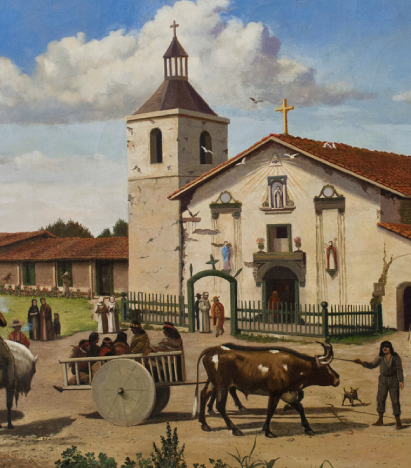
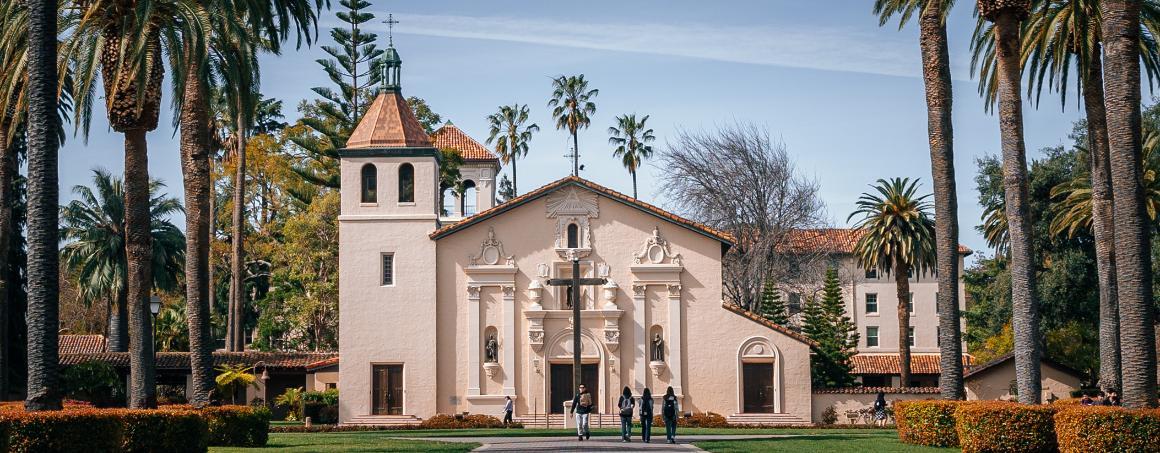
Within weeks, he met Italian Jesuits Michael Accolti and Giovanni Nobili, and together, around an old mission, they founded Santa Clara College, the precursor to the contemporary university.
Jesuits in California
Dating to the final decades of imperial New Spain, the Franciscan missions of Alta California suffered greatly under Mexican and Anglo-American rule. After Mexico’s 1821 independence, land policy dismantled the old mission system, and the Franciscan presence declined.
The United States gained control of California in the Mexican-American War, and the state officially entered the union just three months before Alemany arrived in Monterey.
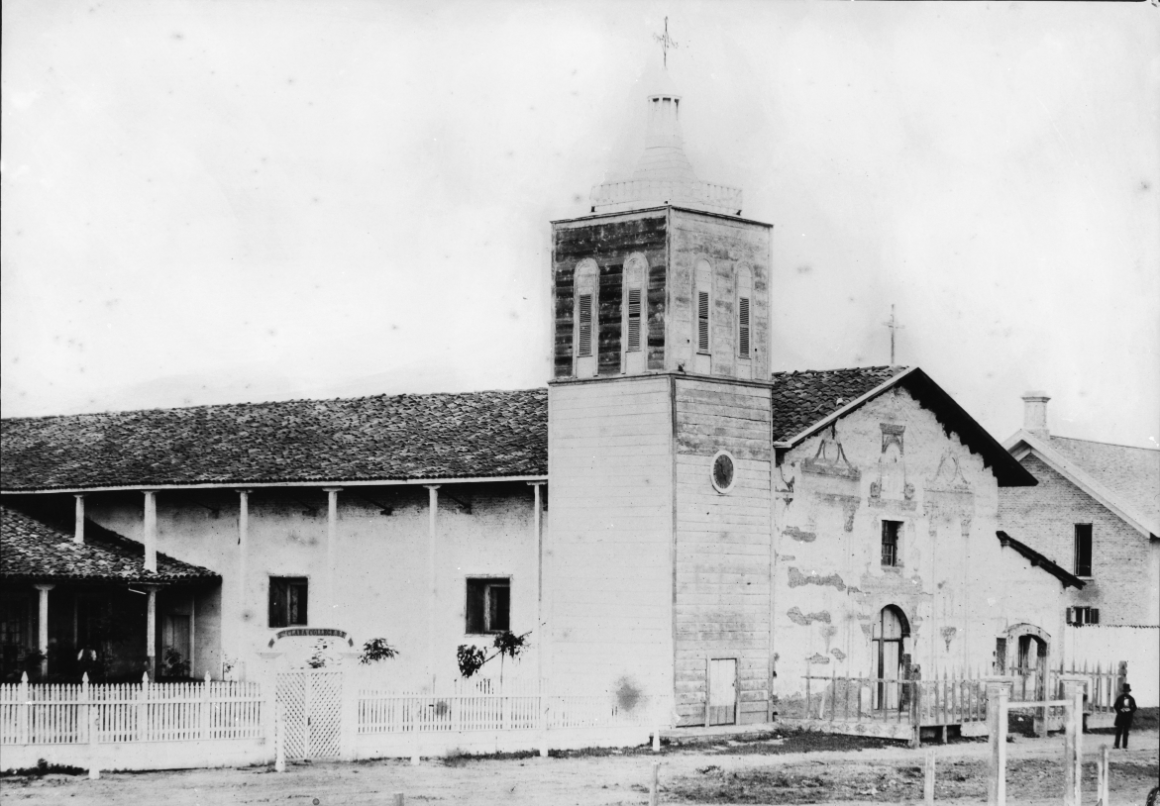
The Santa Clara mission stood in particular decay, and American settlers, unconcerned about its Catholic history, occupied buildings and laid claim to surrounding adobes and lands.
Alemany previously served in Tennessee and Kentucky, where he learned to understand American frontier culture and became a U.S. citizen. He came to North America as a Dominican missionary, and he knew that the religious orders had always served as the forefront of Catholic expansion in the Western Hemisphere. He hoped religious-order personnel would fortify the California Church.
In the 1840s, Jesuit missionaries operated in western Canada and the Oregon Territory, and the two Jesuits, Accolti and Nobili, preceded Alemany to California.
Nobili, who anglicized his name to John, suffered ill health in the cold, damp Northwest. He traveled south in search of healing in the milder Bay Area climate.
Michael Accolti, who had long advocated for a Jesuit presence in California, accompanied Nobili.
The two Jesuits met the new bishop, who immediately saw them fitting into his project to build up the Church.
Although the Jesuit order sent Accolti back to Oregon, Nobili stayed to take over the old Santa Clara mission.
A Bold Beginning
On March 4, 1851, Alemany officially gave Nobili and the Jesuits control of the mission’s pastoral work. From the outset, Nobili’s charge implied his opening a Jesuit school.
On March 19, the feast of his own patron St. Joseph, the bishop visited the mission to mark the new foundation. St. Joseph is also the special patron of West Coast Jesuits, the Catholic diocese, and the Santa Clara Jesuit Community.
For the intervening 175 years, Santa Clara has celebrated the feast as its Founders Day.
The new school, Santa Clara College, attracted students but desperately needed everything else—land, buildings, and teachers. Using legal threats, the little available money, and much bravado, he gradually retrieved the mission’s core property from squatters.
In 1853, Accolti traveled to Europe and persuaded the Italian Jesuits of Turin to send priests to the new college. Both Alemany and the Jesuits soon understood the need to offer more advanced education and assembled the endowment required for state chartering and approval to grant degrees.
Governor John Bigler signed the new charter in 1855, and, in 1857, Santa Clara College granted California’s first bachelor’s degree to twenty-two-year-old Thomas Bergen.
Higher Education Takes Root
Education blossomed across Northern California.
In 1851, the year Santa Clara was founded, Methodist settlers founded California Wesleyan College. The college, which began in Santa Clara, later migrated to San Jose and finally settled in Stockton as the present-day University of the Pacific.
In 1857, the state’s first teacher-training school opened, ultimately evolving into San José State University.
In Berkeley, the University of California started classes in 1869.
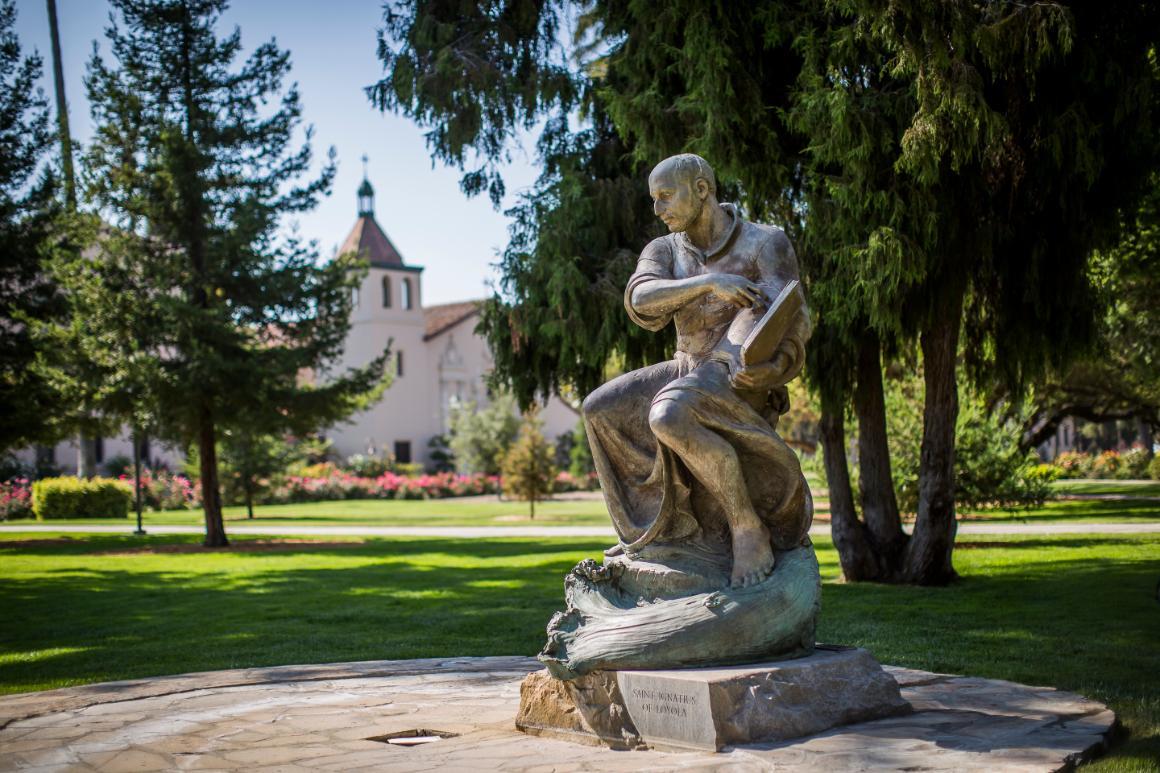
Bishop Alemany’s commitment to education extended beyond Santa Clara.
He invited the Sisters of Notre Dame de Namur to establish the school that later became the first college in California authorized to grant baccalaureate degrees to women.
After he moved to San Francisco as archbishop, Alemany supported the Jesuit St. Ignatius College, forerunner of the University of San Francisco.
In the 1860s, Alemany opened St. Mary’s College, to which he invited the De La Salle Christian Brothers.
Dominican Catherine Goemaere, who had traveled with Alemany from Europe, founded the Dominican Sisters of San Rafael, whose educational ministry would, in 1890, result in opening Dominican College (now University).
A Lasting Legacy
From its inception 175 years ago, Santa Clara has stood at the foundations of educational and civic life in the Western United States. The first Santa Clara Jesuits, along with the bishop and the other religious orders, focused on the challenge of anchoring the Church. Their labor and vision also proved vital to the life of the new American state.
As the University marks this 175th milestone, it looks to its future contributions to the Church, the region, the nation, and the world.
See also:
John B. McGloin, S.J., California’s First Archbishop: The Life of Joseph Sadoc Alemany, 1814–1888 (Herder & Herder, 1966), and Gerald L. McKevitt, S.J., The University of Santa Clara: A History, 1851–1977 (Stanford University Press, 1979).