
Key Takeaways
- An MBA for entrepreneurs focuses on giving founders the strategy, finance, and leadership tools needed to build and manage ventures.
- There are different MBA formats that support different needs, including full-time, online, evening, and executive options that allow entrepreneurs to study while working or building their ventures.
- Career paths after an entrepreneurial MBA are flexible, ranging from launching a startup to roles in intrapreneurship, venture capital, consulting, business development, and leadership in early-stage companies.
When people picture entrepreneurial success, the mind often jumps straight to the familiar stories of Zuckerberg building Facebook from a dorm room or Bill Gates leaving Harvard to start Microsoft. Those stories are memorable, but they're also the outliers. Most entrepreneurs don't rise through pure instinct or luck alone.
That reality makes preparation a crucial aspect of entrepreneurship. An MBA for entrepreneurs offers a practical advantage by helping founders understand the business side of their ideas more clearly. Instead of relying on the slim chance of beating the odds, entrepreneurs who invest in their training create the opportunities themselves.
What Is an MBA for Entrepreneurs?
An MBA for entrepreneurs differs from traditional programs because it focuses on building ventures rather than just understanding how established companies operate. While every MBA covers strategy, finance, and management, entrepreneurship-focused pathways add training in venture creation, innovation, market entry, and fundraising—giving founders the structure and business fluency they need to turn early ideas into viable companies.
Aspiring entrepreneurs often seek MBAs that allow flexibility in shaping the curriculum around their goals. Many programs support this through elective pathways, project-based learning, and exposure to early-stage business environments. The Leavey School of Business's MBA works in this way. It remains a comprehensive, general MBA, but students who want to focus on entrepreneurship can choose the Entrepreneurship and New Venture Creation concentration, which offers coursework aligned with early-stage business challenges.
The support available to founders at Santa Clara University also extends beyond the classroom. University-wide resources give students access to startup guidance, applied projects, and mentorship.
The Ciocca Center for Innovation and Entrepreneurship acts as a meeting point for students who are experimenting with ideas, looking for collaborators, or wanting access to mentors with startup experience. Workshops, events, and interdisciplinary connections give founders exposure to the realities of building something from the ground up.
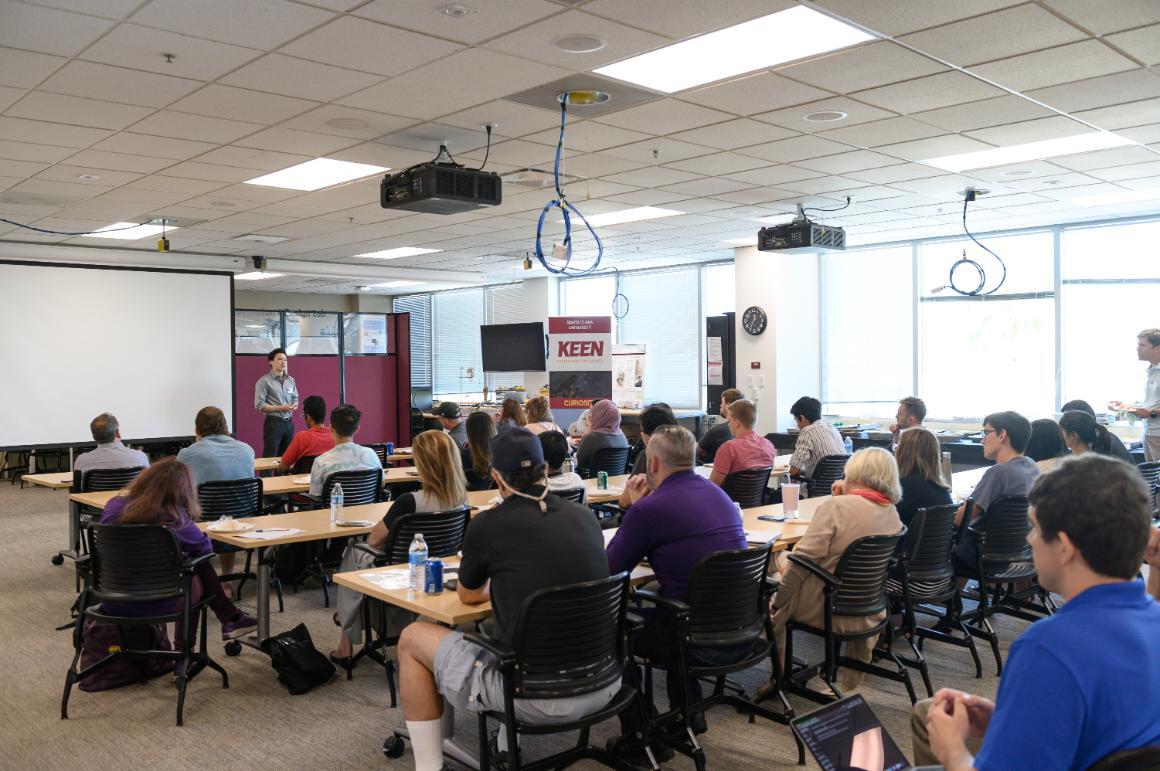
The Bronco Entrepreneurs' Applied Collaboration Hub (BEACH) provides students with exposure to the realities of running small businesses and startups. Students see firsthand how early-stage companies make decisions under pressure and juggle limited resources. It's an immersive way to understand what entrepreneurship looks like day to day, beyond pitch decks and plans.
For students who are further along in their entrepreneurial journey, the Bronco Ventures Accelerator offers a more focused environment to develop their own ventures. Teams work through business models, seek guidance from entrepreneurs and investors, and prepare for the conversations that matter—funding, customers, partnerships, and go-to-market planning.
Why Entrepreneurs Pursue an MBA
Entrepreneurs have several reasons for pursuing an MBA—each is tied to benefits in gaining structure, stability, and stronger leadership abilities while building a business. Many pursue such a degree to gain:
- A stronger grasp of how businesses actually run. Many founders enter entrepreneurship with an idea or technical skill, but an MBA helps them understand strategy, finance, operations, and administration so they can make decisions with more clarity.
- Credibility when working with investors, partners, and early hires. Business education signals preparation, which can make it easier to earn trust. At Santa Clara University's Leavey School of Business, that credibility is reinforced by a strong regional reputation, including the #1 ranking for the Evening MBA in Silicon Valley.
- Access to a wide, supportive network. MBA programs give founders peers, mentors, alumni, and faculty who can pressure-test ideas or offer guidance at key moments. Santa Clara's network across the Bay Area strengthens this advantage, with graduates working across technology, finance, and emerging industries.
Types of MBA Programs for Entrepreneurs
Entrepreneurs have different needs, backgrounds, as well as time constraints. Therefore, there are different types of MBA programs designed with those differences in mind.
Not every founder can step away from their venture for full-time study. Some need a business structure to complement their technical skills. Others are scaling established companies and need an executive-level perspective. These formats include:
Executive MBA (EMBA)
The EMBA is built for seasoned professionals and business owners who already understand the pressures of leadership. Classes typically take place on weekends or in intensive modules, which lets entrepreneurs keep their business running while applying classroom insights immediately to real-world decisions.

According to U.S. News & World Report, the Executive MBA at the Leavey School of Business ranks as one of the top three programs in California and 11th nationwide. It's a recognition that reflects both program quality and its connection to Silicon Valley's startup and tech ecosystem. The cohort model also matters: moving through the program with the same group of peers creates strong, trusted relationships among founders and executives solving similar scaling problems.
Evening MBA
Part-time MBA programs are often the most practical choice for entrepreneurs who want business training while keeping a full workweek. This format spreads coursework over two to three years, giving founders time to earn income, maintain momentum in their ventures, and apply concepts directly to ongoing projects.
Santa Clara University's Evening MBA holds the #1 ranking in Silicon Valley, showing the degree's relevance in a region defined by entrepreneurship. The program also creates a built-in network: evening cohorts draw professionals from companies across the Bay Area, opening opportunities for partnerships, customer insights, and even future co-founders.
Online MBA
Some founders need the freedom to study around unpredictable schedules. The Online MBA provides that flexibility by combining asynchronous coursework with live sessions for collaboration. Entrepreneurs can move between business responsibilities and academic commitments without pausing either.
Santa Clara University's Online MBA, ranked #17 nationally by The Princeton Review, reflects how well this model can work when designed with intention. The online format also mirrors the reality of remote work, giving founders experience coordinating across digital platforms. Importantly, online students still access the University's entrepreneurial ecosystem, including incubators, competitions, and alumni networks.
STEM MBA
For founders with engineering, computing, or scientific backgrounds, a STEM MBA offers a way to pair technical ability with business fluency. Coursework focuses on analytical thinking, technology commercialization, product strategy, and other skills that determine whether a great idea develops into a sustainable venture.

At Santa Clara University, the STEM designation applies only to international students, but domestic students gain similar benefits through concentrations such as Data Science or Entrepreneurship and New Venture Creation. For international students, the extended OPT window of up to three years can be especially valuable when trying to build a venture in the United States.
Potential Career Paths After an MBA for Entrepreneurs
Founding a startup is often the path entrepreneurs picture first, especially when they've used the MBA to shape or refine a business idea. But if they want to explore other careers too, the degree opens several other strong options, including:
- Intrapreneurship within established companies: Leading new initiatives, developing products, or driving innovation inside organizations that value entrepreneurial thinking.
- Venture capital or consulting: Supporting founders by evaluating opportunities, advising on strategy, and helping early-stage companies grow.
- Business development and leadership roles: Guiding organizations through expansion, partnerships, and team growth in positions such as VP of Strategy, Head of Partnerships, or similar roles.
- Scaling roles in early-stage startups: Joining a young company to manage operations, growth, or market entry.
Real-World ROI and Impact
For entrepreneurs, the return on an MBA is measured through outcomes that show whether their ventures gain traction. Startup launch rates, early funding success, and revenue growth are some of the clearest markers.
The impact also shows up in how founders lead. Entrepreneurship involves constant uncertainty; therefore, the ability to make steady decisions matters as much as the idea itself. It's part of why MBA training is so important since it strengthens the way entrepreneurs evaluate risks, plan next steps, and respond when circumstances change. Over time, this steadier decision-making contributes to healthier operations, clearer team direction, and stronger business performance overall.

Although an MBA doesn't replace an entrepreneur's creativity or drive, it does strengthen the business skills that help a venture stay on track when challenges arise.c
Conclusion
An MBA for entrepreneurs blends structured business education with startup-focused training and resources. It won't guarantee success, but it can significantly strengthen your odds by giving you strategic frameworks, financial expertise, networks, and the support many founders lack on their own.
Different formats serve different entrepreneurial needs. Santa Clara University's Leavey School of Business offers all of the options highlighted before, positioned within Silicon Valley's entrepreneurial ecosystem.
Explore our programs at Santa Clara University's Leavey School of Business and join a community where business education supports entrepreneurial ambition.
Frequently Asked Questions
Is an MBA worth it for entrepreneurs?
Yes, for entrepreneurs who want stronger business skills, investor credibility, and access to networks that support venture growth.
Is an MBA necessary for entrepreneurs?
No. You can start a business without one, but the degree can shorten the learning curve and reduce common early-stage mistakes.
Which MBA is best for entrepreneurs?
The best MBA is one that offers entrepreneurship-focused coursework, access to startup resources, and a strong alumni network.
Discover Your Next Step
This will only take a moment.