Stories
Faculty and Staff Notes
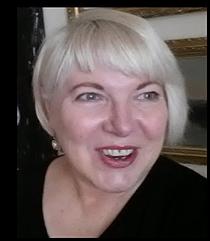
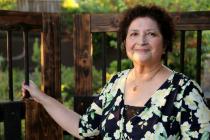

Laura continues to enjoy teaching Self, Community, and Society as well as Social Change, and of course Applied Sociology as a capstone course. In the applied capstone seniors continued to do community based research for local organizations and also developed ePortfolios to showcase their work and skills. In terms of research, Laura published an article in the Journal of Adolescent Research (with Professor Ángel Islas in Biology) about attrition off the pre-medical track for first and continuing generation students. She is very grateful for the research assistance and interviewing that SCU students did for the project by: Karla Arango, Jessica Gagnon, Lily Salinas, Geraldine Linarte, Lindsay Harke, Umang Desai, Hannah Rogers, Martha Njie, Gaby Alvarado, and Karen Hernandez. She is currently co-editing a book about the experiences of students who are undocumented and in college.
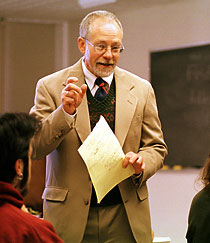
Dr. Powers is really excited by his work this year, because he feels that several years of slow progress on his long-term theory endeavor may (he hopes) be about to reach fruition. As many of you may remember, Dr. Powers has been working for a long time on a modest contribution to unification of sociology’s divergent theoretical paradigms. In the spring, Powers will take a one quarter sabbatical, get away, and try to pull his ideas on this subject together in a single coherent paper.
On a more empirical level, Dr. Powers continues to write about organizational sociology. In fact, a paper co-authored by Dr. Powers and Dr. Fernandez was recently (Fall 2015) pub-lished in the Pacific Sociological Association’s research jour-nal Sociological Perspectives. The title of the paper is “A ‘Paired Cases Contrast’ Method in the Absence of Reliable Met-rics in Organizational Research: Proof of Concept.”
In the classroom Dr. Powers continues to try to illustrate the importance of applying sociological sensibilities in the 21st century workplace. He asks students how they would em-ploy sociological insights in order to help crystallize an organi-zation’s defining mission/vision/strategy, improve communica-tion, and reshape organizational culture.
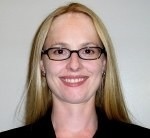
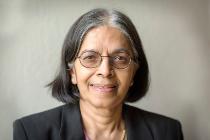
Dr. Laura Robinson continues to teach Sociology 49 (Computers, Internet, and Society), Sociology 11A and 12A (Cultures and Ideas I and II), and Sociology 118 (Qualitative Methods). Regarding Sociology 49, she continues to ask stu-dents to use their sociological imagination to self-reflect on their digital media use. Where Soc. 11A and 12A are concerned, she is enthusiastic about the opportunity to draw on her work as a Brazilianist in this course on global cultures; the fact that some of this year’s students have already been to Brazil is a real treat! For Qualitative Methods, Robinson hopes that former sociology students who took this class with her are still using their socio-logical eye to see the social dynamics embedded in our every-day food practices.
Robinson is also active beyond the classroom. In our department and on campus, Robinson is busy on a number of fronts. She is preparing for visiting scholar Cecilia M. Santos later this year and is delighted to continue her activ-ity in the Ignatian Faculty Forum and as a scholar of the Markkula Center for Applied Ethics. Regarding the latter, she is working on a project on digital privacy issues. Off campus, Robinson finished her year as chair of the Com-munication and Information Technologies Section of the American Sociological Association (CITASA) and is con-tinuing her work as a series editor of Emerald Studies in Media and Communications.