Careers/Job Opportunities in CESE
Civil and Environmental Engineering provides a rich array of job opportunities across diverse sectors and settings. Whether you prefer urban or rural environments, teamwork or entrepreneurship, public or private sector employment, fieldwork, or computer-based activities, careers in civil and environmental engineering offer unparalleled flexibility and breadth of opportunities. Below find a description of:
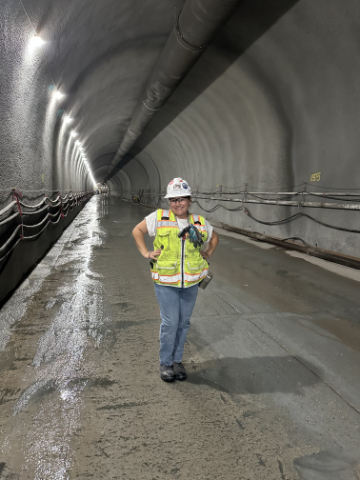
“I'm a field engineer working with Flatiron Construction at the Anderson Dam Tunnel Project. I heard about this position through the SCU STEM Career Fair during my senior year and got to connect with the current Project Manager who invited me for a site tour. I was taking Dr. Abbott's Reinforced Concrete class at the time and found myself comparing what I learned in class with what I saw on the project construction site. This empowered me to take the job offer from Flatiron and it's let me be a part of cool operations!”
Fields of Civil and Environmental Engineering
Civil and Environmental Engineers assess the feasibility of proposed infrastructure projects and develop detailed plans and specifications. This includes analyzing factors such as environmental impact, cost, materials, and labor requirements across a wide variety of projects including roads, bridges, tunnels, airports, dams, water supply systems, sewage treatment plants, buildings, and environmental restorations.
- Construction managers and engineers oversee the construction of infrastructure projects making sure projects are built safely, correctly, on budget, and on time.
- Structural engineers design buildings and other structures to have structural integrity and stability to ensure they can withstand various environmental conditions and loads.
- Environmental engineers design solutions to address environmental issues with water quality, air quality, and ground contamination and to minimize the environmental impact of construction projects.
- Geotechnical engineers evaluate the properties of soil and rock to determine their suitability for supporting infrastructure including building tunnels or earth dams and supporting structures.
- Transportation engineers design transportation systems, including roads, highways, railways, and transit systems, to ensure efficient movement of people and goods.
- Water Resources engineers manage water resources by designing and implementing systems for water supply, flood control, irrigation, and wastewater treatment.
- Civil/Site engineers oversee and plan how a large project integrates into an existing city or municipality including traffic, utility, landscape and environmental considerations.
Possible Job Roles
- Engineering Design: Developing the actual design of a civil project. Whether designing the beam and column sizes for a building or the required channel cross-section for a storm channel, the engineers who design infrastructure projects apply math, science and creativity to develop economical, sustainable, and safe solutions.
- Project Management: Overseeing and coordinating projects, including scheduling tasks, overseeing budgets, and ensuring that projects are completed on time and within budget.
- Risk Assessment and Mitigation: Assessing potential risks associated with projects or climate change, such as natural disasters or environmental hazards, and developing strategies for resilience to mitigate these risks.
- Research and Development: Engaging in research to develop new materials, improved hazard models, construction techniques, and technologies to improve the efficiency, safety, and sustainability of infrastructure projects.
- Regulatory: Civil and environmental engineers must design to a minimum standard of safety as established in the regulatory codes. Projects must be reviewed and inspected in both the design and construction phase to ensure code requirements are being met.
Employment Opportunities and Salary
According to the US Bureau of Labor Statistics, there were over 375,000 jobs in Civil & Environmental Engineering with new jobs expected to grow between 5% and 6% starting in 2022. This is expected with the $1.2 trillion 2021 Bipartisan Infrastructure Law that has spurred infrastructure spending at both the State and Federal levels. Additionally, technological advancements and the need for sustainability and infrastructure resilience in the face of increasing natural disasters are all transforming the fields of civil and environmental engineering and creating additional job opportunities.
Civil and Environmental Engineers work anywhere and everywhere! Check out the US Bureau of Labor Statistics data on where CESE majors are employed and their mean salaries (Civil Engineers and Environmental Engineers). While some engineering jobs require you to live in cities that are tech hubs, civil and environmental engineers are needed everywhere from rural counties to large metropolitan areas. With the average California salary over $115K in 2023 and the mean national salary over $100K, civil and environmental engineering offers a comfortable living. You should expect higher-than-average wages when living in urban areas and a bit less in rural areas where the cost of living is often much less.
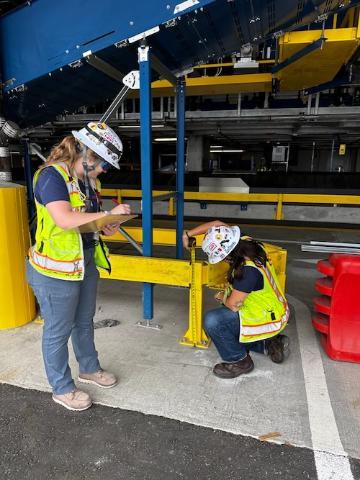
Mia Vlaming '23 and Vanessa De La Rosa '23 working on the San Francisco International Airport T1-C project for Hensel Phelps Construction Company"
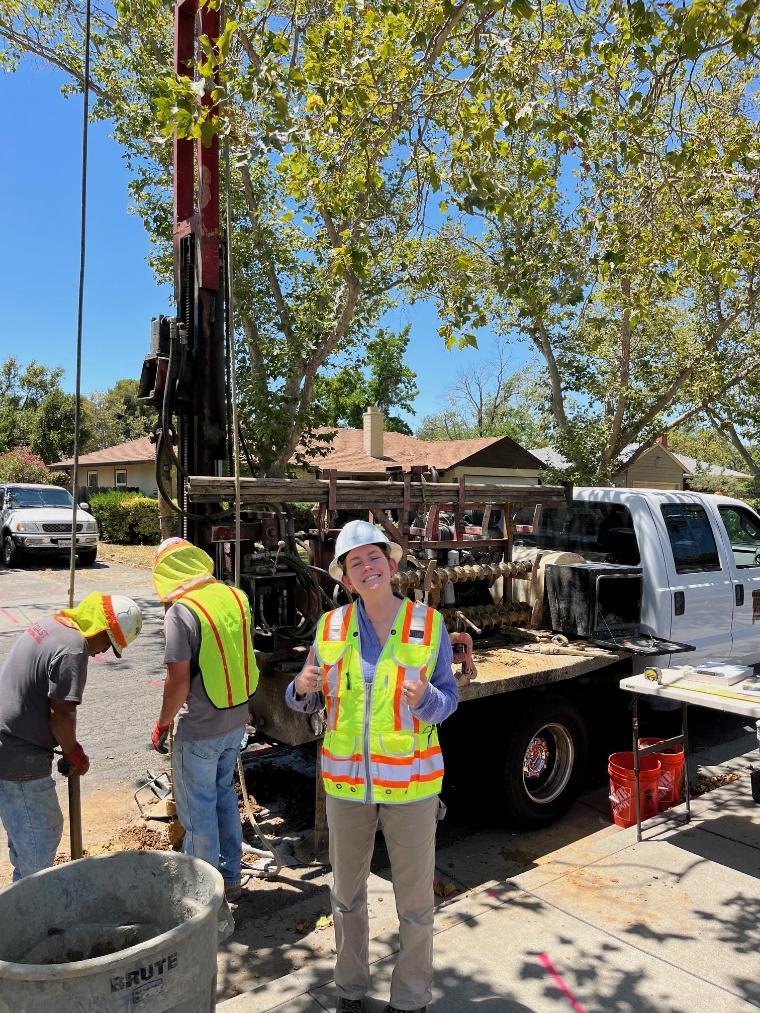
Katie Leisenring '25, on her summer internship in the field as an observing engineer for the geotechnical drilling for a sanitary sewer replacement project.
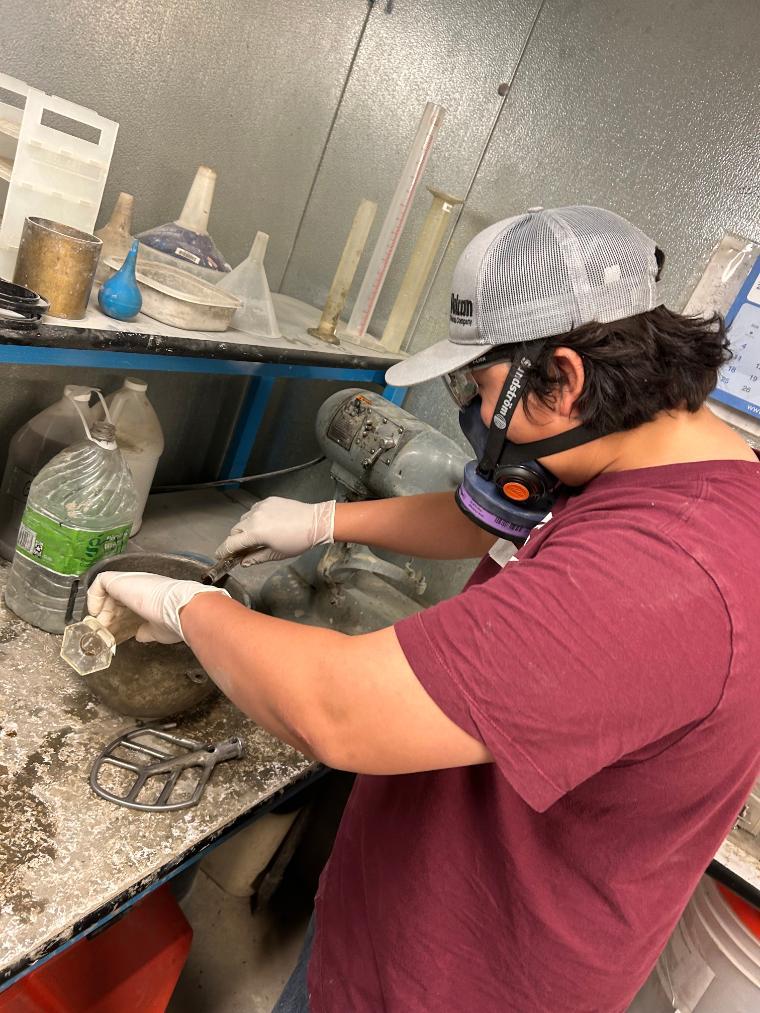
Steven Garcia '25, during his summer internship at Vulcan Materials’ National Testing Laboratory. He is working on test mixes for greener concrete.
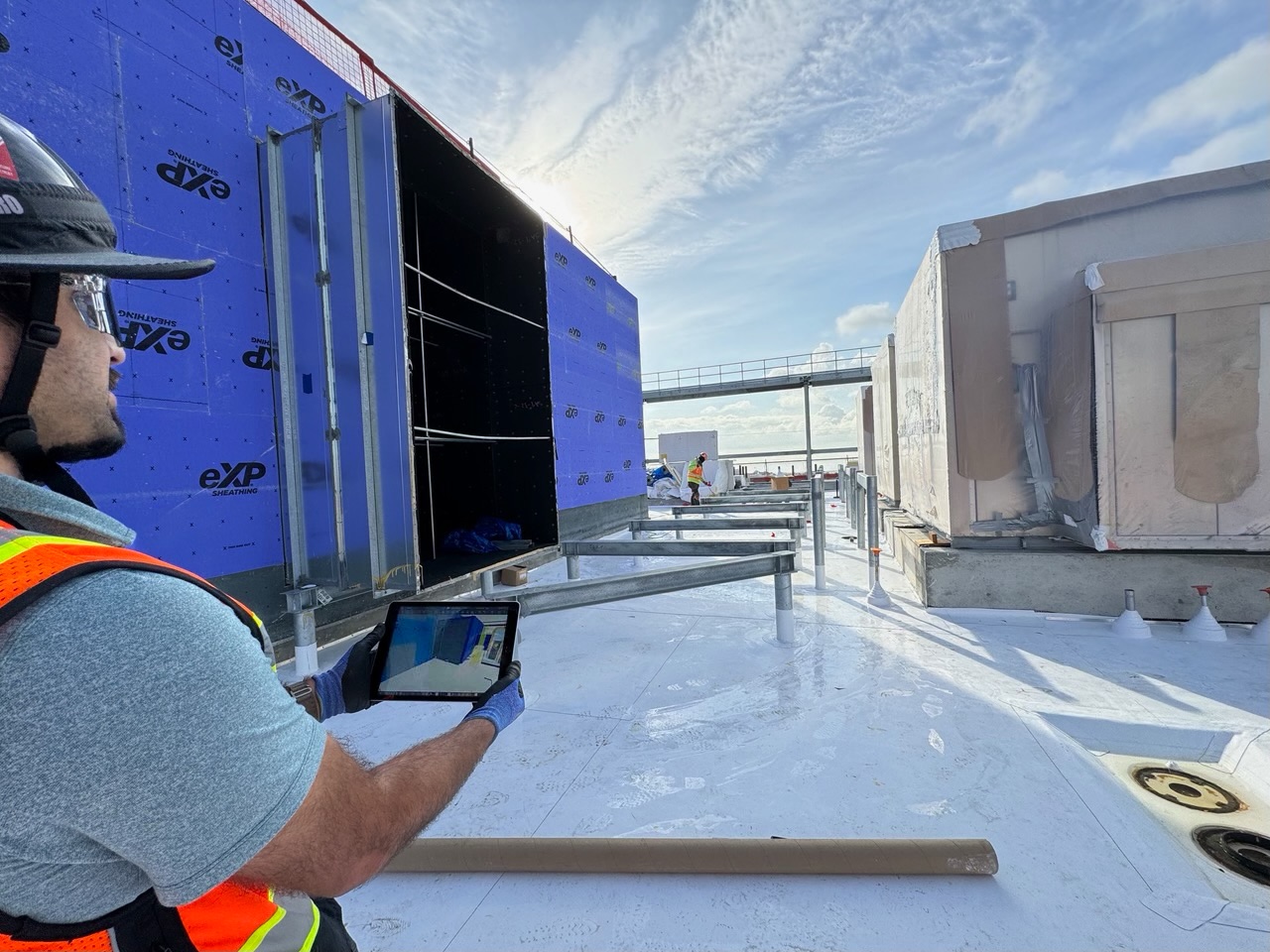
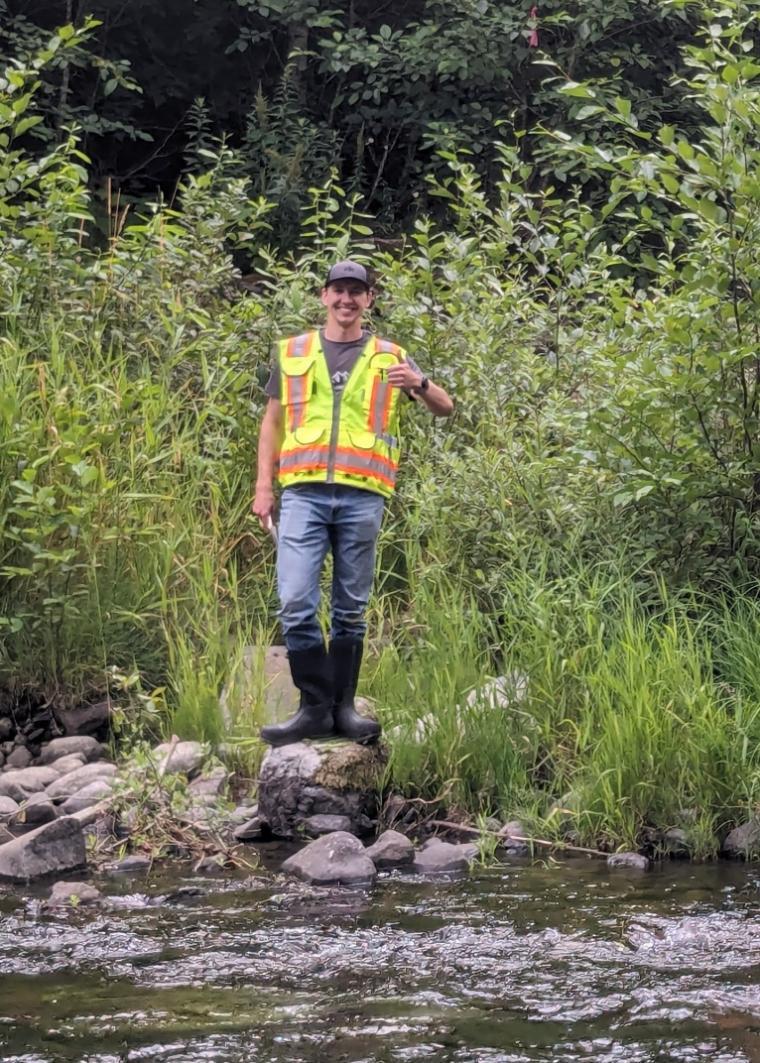
Nicholas Szigeti '20 doing field work on the Chehalis River, WA for the conceptual design of a flood retention facility. This site visit was to see the project area and collect sediment samples for use in an upcoming sediment transport model.
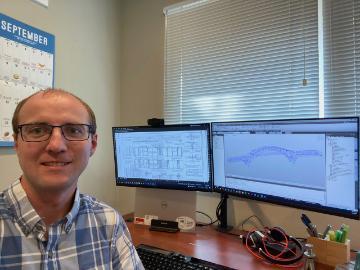
Jeffrey Meier B.S '20, M.S. '21, working on a model of an existing 1950s cantilever through truss bridge that will be used to design an engineered demolition plan for Foothills Bridge Co.
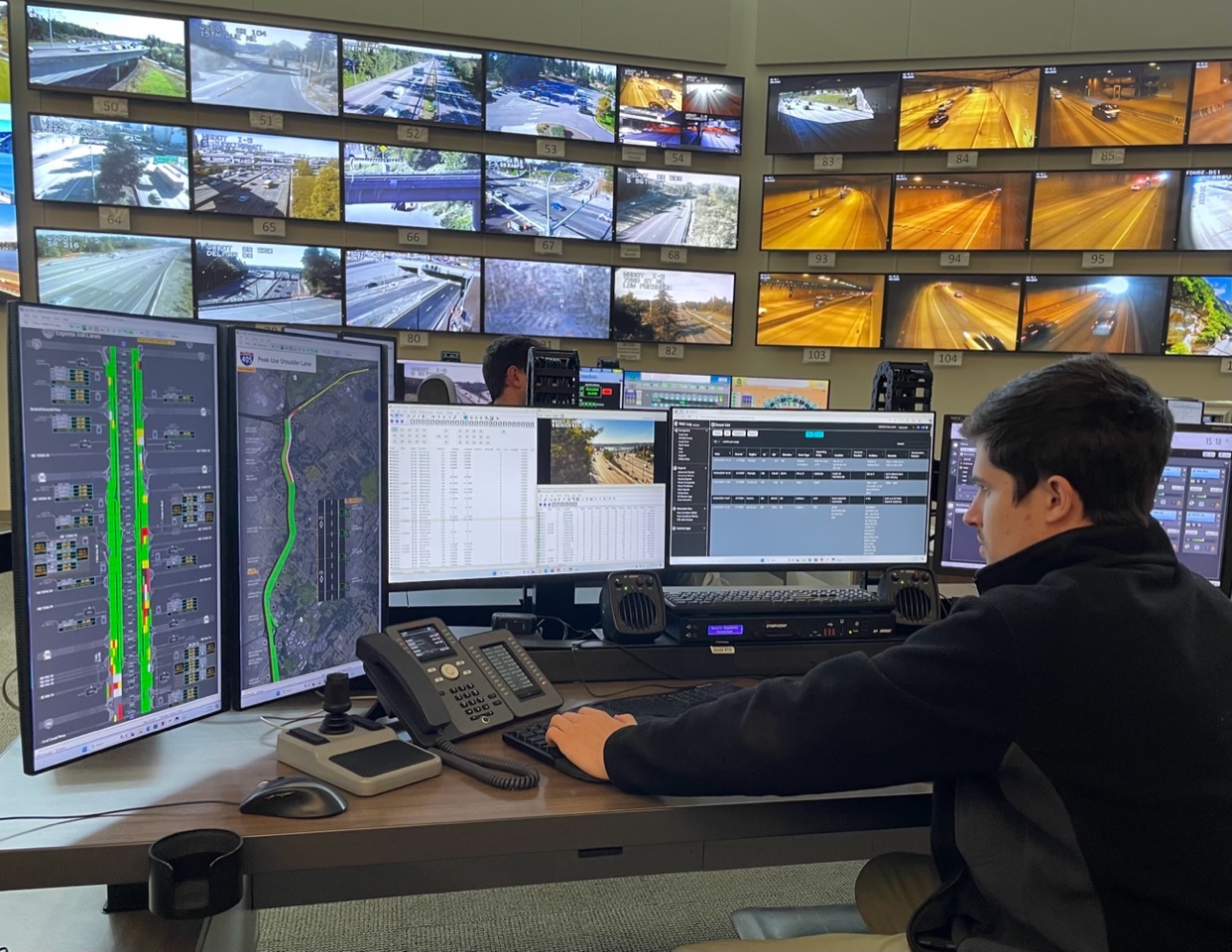
Using R Programming Language, Griffin Donnelly '20 develops data reporting tools to monitor traffic for the WSDOT’s Northwest Region, which includes Seattle and Bellevue.