Happiness Is a Warm Greenhouse
A Hero Projects "voluntourism" trip to Alaska last summer planted the seed for one civil engineering senior design team’s year-long project—to design a solar thermal greenhouse for the Denali Education Center (a nonprofit educational partner of Denali National Park and Preserve), to not only provide fresh produce, but also serve as a model of energy efficiency and best practices.
"When we visited the Center," said Sam Heath of his trip with teammates Ashley Husbands and Cora Lemar, "we learned they have the largest solar thermal array in Alaska, but it is currently only being used for heating water. With 21 hours of sunlight during the summer months, excess heat produced from the array can cause the solar panels to burst, so they were looking for a way to put that extra heat to use."
"The staff at the Center wants to be as sustainable as possible; they want to eat healthy meals, and they already do some gardening in raised beds, but with such a short growing season, they are limited in what they can do," said Husbands. "This project could allow them to expand their growing season and increase the types of food they can grow."
"There is a lot of potential in Alaska for photovoltaic and heating liquid using solar thermal," said Lemar. "Heating (and the dependency on coal and oil) is one of the largest expenses for Alaskans. When you also factor in the cost of shipping produce to outlying areas, you can see how the project can help save them money while shrinking their carbon footprint."
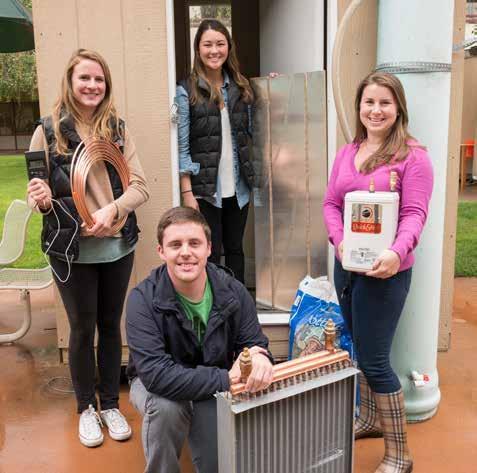
Back at Santa Clara, the three quickly recruited Mariko Tollan to join the team and set to work on the four elements of their project: structural design of the greenhouse, foundation design, mechanical heating system, and a storm water collection system to be used for irrigation. "One of the biggest challenges in designing the mechanical system is figuring out what will work best," said Tollan. "Do we heat with a radiator or through the floor? How much sunlight will be coming in? How do we keep the greenhouse at a constant temperature? We’re testing different options in a simulated environment here on campus."
Information on snow and wind loads, and geotechnical advice has come from engineers contacted through local chapters of professional societies. The team has also been in touch with vendors and glazing manufacturers to learn how much load and deflection their monoslope roof design can take, and they have regular conference calls with the folks at the Denali Educational Center. "Their excitement about what we're doing makes us even more engaged," said Heath.