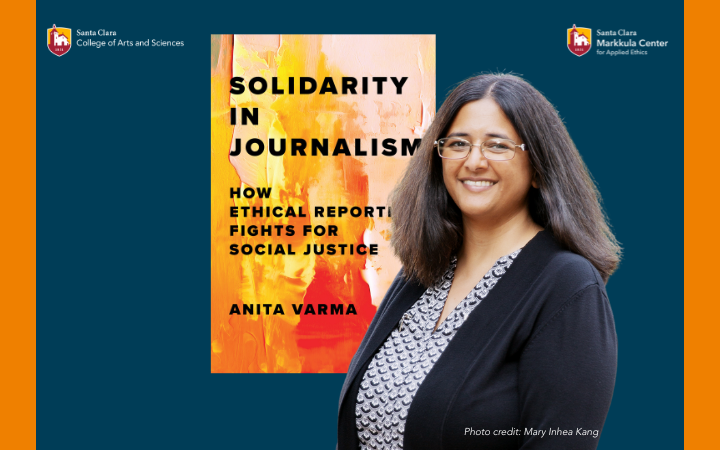
Anita Varma is the author of Solidarity in Journalism: How Ethical Reporting Fights for Social Justice. She was previously the assistant director of Journalism and Media Ethics at the Markkula Center for Applied Ethics. Views are her own.
Solidarity in Journalism: How Ethical Reporting Fights for Social Justice argues that the best of ethical journalism stands up for people’s basic dignity, and has done so in the United States since the 1800s. Solidarity reporting has been celebrated and censured within the profession of journalism for just as long. Ironically, journalists have received the highest awards for reporting that is explicitly recognized for impacting society by standing with its most vulnerable members to affect real-world change in the direction of social justice, while other journalists have been brutally attacked for doing so. Rather than a violation of ethical practice, solidarity in action is the best of how journalism serves the public.
I stand by that argument, and also recognize that my book does not fully account for the longstanding and escalating dangers of doing solidarity reporting that journalists face today. Worldwide, solidarity reporting has led to journalists being arrested, assaulted, and assassinated.
For example, in January 2026, independent reporter Georgia Fort was arrested in Minneapolis. Fort is widely respected for showing up in solidarity with the communities she covers. Then, in February 2026, community reporter Frenchie Mae Cumpio was denied bail and sentenced to 12 to 18 years of prison in the Philippines after being charged with terrorism following reporting on rural people living in poverty. In response, the Philippines' International Association of Women in Radio and Television said, “This sends a chilling message: that documenting the struggles of the poor has become a punishable offense” and called it “a blatant act of state-sponsored silencing."
Solidarity reporting means that journalists report on issues placing people’s basic dignity at stake, engage in sourcing practices of going there, being there, and going back, and narrate stories by focusing on shared conditions beyond personal circumstances. Doing so is often viewed as critical of political parties, disruptive to social hierarchies, and disrespectful of the presumed credibility of elites. Truthful reporting, however, is not deferential to political parties, social hierarchies, or elites. Truthful reporting is faithful to the reality of what is happening on-the-ground, to real people in real time.
When I started researching solidarity in journalism in 2014, the most common reaction I heard was, “No one will care about this.” In the 12 years since then, the unmistakable rising pitch of hostility against solidarity in journalism alongside a groundswell of enthusiasm for solidarity in journalism has made one truth abundantly clear: many people care about solidarity reporting, in the brightest and darkest senses of care. Some individuals and groups care enough to go to extreme lengths to stop the public from knowing about solidarity reporting at all. Others have demonstrated that they care enough to fight a dehumanizing status quo through solidarity reporting even – and especially – when doing so means forfeiting personal safety in the service of the public’s right to know. If the truth of solidarity reporting were insignificant, no one would bother to attempt to repress, endanger, and discredit those of us who do it, study it, and dare to speak about it.
In many ways, Solidarity in Journalism is a story of how ethical journalism challenges the passive neglect of vulnerable people who suffer under the status quo. The sequel, Dangerous Solidarity: How Truth Telling Persists in Hostile Conditions, will be about how ethical journalism challenges the active abuse of people who attempt to practice solidarity with vulnerable people and become vulnerable themselves to allegations of criminal wrongdoing and violent escalations that attempt to stop truthful reporting from happening.
When solidarity reporting becomes a crime, we’re all in danger. A society without solidarity is no longer a society at all. Resisting repression begins by refusing easy division and insisting on standing together for a simple truth: everyone – without exception or exclusion – has a right to live in conditions that respect their basic humanity.
To continue the conversation, join us for “Truth-Telling in Dangerous Times as an Act of Solidarity: The Rising Stakes of Ethical Journalism” on Wednesday, April 22 at 1pm. A recording will be publicly available after the event.