Invisible Wounds: A Call To Action About Moral Injuries Beyond the Battlefield
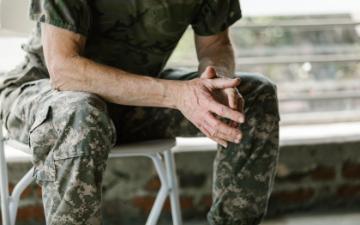
Close-up of a military veteran's hands in a therapy session, emphasizing mental health support. RDNE Stock Project via Pexels.
Annie Schloss is a double major in public health and biology with a minor in religious studies and a Hackworth Fellow with the Markkula Center for Applied Ethics at Santa Clara University. Views are her own.
Sergeant Matthew Alan Livelsberger, 37, carried far more in his heart than his father recognized when he last saw his son around Christmas in 2024. Sergeant Livelsberger was a highly decorated veteran, having served in Special Forces Intelligence in both the Army and National Guard. On January 1, 2025, Livelsberger died by suicide inside a Cybertruck that exploded outside a hotel in Las Vegas.
He left behind at his home in Colorado his wife and eight-month-old daughter. Seven nearby civilians were injured in the blast. The horrible, heartbreaking spectacle of Livelsberger’s death made front-page news across the country. But the spectacle also pointed to the profound and often-hidden challenges many veterans face when they return home from conflict at a time when few civilians apart from close family members have much stake in those veterans’ struggles.
In this article, I will focus on one of the most overlooked of those challenges: a phenomenon called “moral injury” that combines the violation of deeply held moral beliefs with a terrible sense of isolation (My discussion in this article relies extensively on moral philosopher Nancy Sherman’s book “Afterwar”). The moral injury may be the result of the act of killing in combat while following clear and legitimate orders. Or the injury may follow from actions taken in response to confusing or problematic orders. Or the injury may arise with no blame whatsoever amid the violent uncertainty and split-second scenarios that mark the more intense manifestations of military life: For instance, a roadside bomb kills a buddy but spares a friend who happened to sit on the far side of a truck closer to where the blast went off. Whatever the origin may be, moral injury can be manifested as crippling guilt, shame, and social isolation. The Veterans Administration has noted the insufficient attention given to moral injuries borne by soldiers. For instance, the Master Resilience Training (MRT), a U.S. Army program designed to build resilience and mental toughness, as well as cultivate positive coping skills, was recently stopped (U.S. Army, 2025). The program was initially created to combat the high levels of suicide seen amongst veterans.
In writing this article, I hope to help bring the idea of moral injury to a broader audience. In doing so, I hope to contribute to the healing of veterans carrying this insidious wound. I also hope to help re-connect the larger public to the burdens that veterans carry. One can support a particular war or not, or support military service or not: Whatever the case with one’s convictions about the military, the veterans coming back from conflict are carrying burdens that can be laid down only by being welcomed home.
Moral Injury and the Burdens of Returning Vets
It is important to understand moral injury in light of related issues that also affect many veterans returning home. Now more than ever after a 20-year war in Afghanistan, and a 10-year war in Iraq, many soldiers are returning home. Three key related issues stand out: veteran homelessness, PTSD, and veteran suicides. While there are many causes of the struggles that afflict veterans returning home, moral injury is often a poorly recognized factor in all of these disturbing phenomena.
Veteran homelessness remains a persistent issue in the United States. As of January 2024, an estimated 32,882 veterans were experiencing homelessness nationwide, with 13,851 living unsheltered without access to stable housing (U.S. Department of Veterans Affairs, 2024). Veterans comprise approximately 20% of the adult male homeless population, despite representing a smaller share of the general population (National Coalition for Homeless Veterans, 2024). The leading contributors to veteran homelessness include substance use disorders, post traumatic stress disorder (PTSD) and other mental health challenges, as well as low income and economic instability following military service (NVHS, 2024).
Post-traumatic stress disorder and related psychological injuries remain a major public health issue among U.S. veterans, yet awareness, access to care, and understanding of treatment options remain limited. Estimates suggest that between 10–30% of combat-exposed veterans will experience clinically significant post-traumatic stress symptoms during their lifetime, and hundreds of thousands of post-9/11 veterans are living with invisible psychological and neurological wounds, including PTSD and traumatic brain injury (TBI) (U.S. Department of Veterans Affairs, 2023).
In 2021, women made up 17.3% of the active-duty force, while men made up the remaining 82.7% (U.S. Department of War, 2025). Of the 5.8 million Veterans who served in the fiscal year of 2024, 14% of men were diagnosed with PTSD, while 24% of women were diagnosed with PTSD (U.S. Department of Veterans, 2023). These statistics highlight the significant gender imbalance, as women are generally more likely to acknowledge mental health challenges, seek help, and engage with support systems which results in higher rates of diagnosis.
Recent VA and national reports estimate that more than 6,000 veterans die by suicide each year in the United States, translating to approximately 17–22 deaths per day (U.S. Department of Veterans Affairs, 2023). Veterans also experience significantly higher suicide rates than non-veterans, even after adjusting for age and sex (U.S. Department of Veterans Affairs, 2023). Despite national prevention efforts, suicide remains a leading cause of death among younger veterans (U.S. Department of Veterans Affairs, 2023).
Don’t Just Tell Me Thank You
One of the harshest dimensions of moral injury is an intense solitude. The first point I want to make is how that intense solitude is made worse by the disconnect in our country between military life and civilian life.
Many civilians view war and foreign affairs as distant issues. For the current generation, war feels so distant because it largely unfolds on international soil rather than within territory of the United States. This allows the general public to remain emotionally and morally detached from the consequences of war. In a way it allows the public to benefit from military action without confronting its human costs.
Service members return home to a society that offers symbolic gestures of gratitude like the common phrase, “Thank you for your service.” People mean well when they say this, but it is not enough. There needs to be more than simple words of appreciation; society must take an active role in supporting veterans.
While a military draft carries with it important issues, its absence has amplified the divide between the general public and armed forces. When military service was compulsory, the possibility that it could be anyone who could be called to serve created a shared sense of responsibility. The draft almost served as a link between the general population at large and the realities of war, making its costs increasingly visible and widely felt amongst many.
On the other hand, the all-volunteer military has shifted the burdens of war onto a small segment of the population. This allows the majority of the population to remain detached from its physical, psychological, and spiritual consequences. This mindset perpetuates the understanding that military service is a personal choice, rather than a collective societal obligation. This idea also absolves the general public of any responsibility pertaining to the outcomes of wars fought in their name. Without a draft to encourage national involvement, the burden of war is unevenly distributed, leaving veterans to carry the cost alone. The sense of collective responsibility shared by everyone invites a form of moral reciprocity, a “golden rule” framework, in which civilians are better positioned to understand and empathize with the experiences of those who serve.
Today’s all-volunteer military force reflects a broader “consumerist spirit” in which military service is treated as an individual decision rather than a collective responsibility. This framing allows civilians to shift the responsibility for the consequences of war, like moral injury, entirely onto service members themselves. In doing so, individual service members are compelled to bear the outcomes of their choices entirely on their own, masking the reality that service members act on behalf of the entire nation.
These are some of the many aspects that contribute to the separation and isolation of service members from the general public. In my judgment, this distancing within society perpetuates the cycle of moral injuries, which can arise not only from actions taken in war, but also from the feeling of being abandoned, misunderstood, or dismissed by the society that sent them to fight. The sentiment, “Thank you for your service,” fails to acknowledge how removed we are from the problem as a whole.
Split Loyalties
In any job, one always has some degree of dual loyalties. A boss gives a directive and an employee chooses to follow it or not. Dual loyalties in the military take on a greater degree of consequences due to the life and death stakes of many military decisions and uncontrollable environments in which these decisions are made. Moreover, the loyalties create tensions between obedience to authority and loyalty to one’s own moral convictions. On the one hand, there is loyalty to commanding officers and the mission at hand, which may involve orders concerning life and death matters; on the other hand, there is loyalty to our own convictions.
Imagine a hypothetical scenario in which a service member deployed in a conflict zone is ordered to carry out an airstrike on a building that is believed to be used by the adversary. Intelligence reports suggest the target is strategically important, and therefore the airstrike must be carried out according to plan. But there are also signs that civilians may still be inside or nearby the striking zone. The mission proceeds because the strike is considered necessary to protect troops on the ground and weaken the opposing force. The pilot understands that following orders is part of her duty and that refusing these orders could jeopardize the mission and the safety of fellow service members on the ground. Yet the possibility of harming innocent people, including women and children, weigh heavily on her. She has doubts about whether her commanding officer actually understands the degree of civilian presence at the bomb site. Even if the strike is legally approved and follows all the rules of engagement, the pilot may later struggle with guilt and end up second-guessing the orders she was given. The tension between carrying out orders and protecting innocent lives can create deep moral conflict, which goes to show how split loyalties can lead to a moral injury.
One way this idea of split loyalties contributes to moral injury is through the conflict between obedience to authority and obedience to one's personal moral judgement. Military culture emphasizes following orders and maintaining discipline. These values are a necessity in combat situations. Moral injuries arise when service members are ordered to carry out actions that violate deeply held beliefs about justice, dignity, and the sanctity of human life.
The individual is forced to choose between loyalty to the commands given and loyalty to one’s inner conscience often about life and death matters. With either choice comes a sense of moral failure. Even when they are lawful, orders may still be perceived to be ethically wrong, which can leave service members with lasting guilt, shame, or self-condemnation that cannot be easily resolved.
A second dimension of split loyalties involves the tension between loyalty to one’s platoon and the responsibility to abide by broader moral principles. Soldiers are trained to protect and rely on one another, developing intense bonds that resemble that of a close family. This unique allegiance to each other can make it difficult to question or report the actions of fellow members of one’s unit, even when those actions conflict with one’s morals or rules of engagement that impose tactical limits on what soldiers may do on the battlefield.
Sherman argues that moral injury frequently stems from these times of awkward silence, when a soldier feels complicit not because that soldier acted incorrectly but because he or she failed to intervene at all with problematic behavior in their unit. The fear of betraying one’s unit or of being perceived as disloyal can overwhelm the commitment to justice or human dignity. Moral injury follows from such intense experiences of conflicting loyalties.
Trust
The issue of trust is a closely related moral phenomenon to the issue of split loyalties. Trust operates as the foundation in military structure. It shapes how soldiers understand authority, interact with one another, and ultimately navigate moral dilemmas they face along the way.
Trust can be understood as a relationship grounded in confidence, dependence, and shared responsibility between individuals and institutions. Trust exists in tension with personal morals especially in situations where loyalty and morality conflict with one another. While trust is a necessity in combat, it comes with limits. When trust is violated, the injury extends beyond disappointment, creating a deep sense of betrayal that can undermine an individual’s confidence in leadership, relationships, and their own moral judgement.
Trust in commanding officers is essential for maintaining order, discipline, and effectiveness in military operations. Soldiers are trained to believe that the orders they receive come from a place of tactical and strategic necessity. This trust allows for quick decision making under high pressure environments where hesitation can be deadly.
However, this expectation assumes that those in places of power act with integrity and sound judgment. Thus trust can become dangerous if it discourages questioning authority particularly when orders may be illegal and conflict with moral standards. Therefore, while trust and leadership are necessary, they must be balanced with accountability and moral responsibility.
Equally important is the trust built between soldiers themselves. They must work as a team, as one cohesive unit. This form of trust is developed through lived experiences, reliance, dangerous situations, and mutual vulnerability. Mutual trust between service members fosters cohesion, strengthens morale, and ensures individuals can depend on one another for both physical safety and support. While this trust remains crucial for a cohesive unit, it can also create pressure to conform or to remain silent. This can be especially dangerous in situations where speaking up may be necessary. Soldiers must ultimately learn to trust their own best judgment when faced with conflicting loyalties between authority, peers, and personal morals.
Because moral injury can also stem from a betrayal of trust, healing must also be rooted in rebuilding trust. Rebuilding trust requires restoring integrity at the institutional, communal, and individual level. Healing involves rebuilding trust within oneself, restoring confidence in one’s own moral judgement after experiences of betrayal, guilt, or moral conflict have undermined it. True integrity not only requires the ability to trust others, but also the courage to trust oneself enough to question those in authority when they are not leading with honor.
Shame & Guilt
While split loyalties and trust help explain how moral injury is formed, shame and guilt help explain how moral injury is often emotionally experienced. These emotions are common human responses, but within the context of the military they take on distinct and often intensified forms. Guilt arises when individuals believe they are blameworthy for having violated a moral rule or caused harm, while shame cuts deeper, and targets one’s sense of worth and identity.
In cases of moral injury, these emotions become entangled, reinforcing feelings of self-blame, isolation, and unworthiness. Understanding the difference between shame and guilt is essential to understanding why moral injury can persist long after combat, and why healing requires much more than forgiveness alone.
Shame and guilt are central to moral injury because they describe how soldiers emotionally process actions that conflict with their moral values. Nancy Sherman argues that guilt arises when individuals believe they are responsible for having violated a moral rule or caused harm, even if the action occurred within the chaos of combat, in situations beyond a soldier’s control.
In the context of the military, this guilt can become intensified because soldiers often act under order and in high-pressure environments where decisions are made very quickly. In the military, guilt can become intensified because soldiers are often required to make quick decisions under orders and extreme pressure, leaving them to question whether they should have acted differently even when their choices were constrained by circumstances beyond their control.
Sherman explains that this sense of moral responsibility can cause lingering feelings of guilt long after the violent event has passed. Unlike other sorts of trauma, moral injury involves the recognition that one’s own actions, or failure to act, may have contributed to wrongdoing. Individual’s actions may come from judgements that are made under pressure, where information may be incomplete and time is limited. In these particular situations, military personnel may act in ways that feel necessary at the time, but in which they later recognize those decisions contributed to irreversible damage of great and deadly consequence.
While guilt focuses on one's actions, shame targets a person's sense of identity–who they are as a person. In the context of the military, this feeling can quickly become overwhelming because military personnel hold themselves to high standards of honor, loyalty, and moral conduct. Thus, what begins as guilt over blameworthy conduct can develop into shame when military personnel internalize their actions as reflections of their moral character. Instead of judging a particular decision, they judge themselves, leading to a profound and negative sense of self-worth.
Sherman emphasizes that shame is devastating because it often leads to isolation. Soldiers may withdraw from friends, family, or fellow service members because they feel that others cannot fully understand what they have experienced or what they have done. This isolation reinforces the emotional pain that is attached to moral injury, as individuals internalize their shame rather than talk about it. As a result, the psychological burden becomes more difficult to process and heal. It is hard for civilians to truly understand how intensely military personnel experience these feelings.
One of the most important aspects of Sherman's discussion is how shame and guilt become intertwined and reinforced by the public’s misunderstanding of war. Many civilians view war in the simplest of terms, often judging soldiers’ actions without fully understanding the extreme circumstances of combat.
Sherman argues that the lack of understanding can heighten a soldier’s moral injury because a soldier feels both personally responsible and socially condemned by the public. When society fails to acknowledge the moral complexity of military service, soldiers struggle to find forgiveness or understanding from those around them. This makes healing even more difficult than it already is, because moral injury requires compassion from both the individual and the general public at large.
Shame and guilt in the context of the military is far more complex than the universal experience of shame and guilt. We live in a profoundly individualistic culture. We tend to view shame and guilt with the same individualistic lens, and believe that the consequences of our actions affect very few individuals. But actions taken by military personnel may affect vast numbers of people with the gravest of consequences. In other words, many military personnel carry the weight of the world on their shoulders. And too often that weight is represented by the heavy burdens of guilt and shame.
Hope
Hope is a powerful force, especially for military personnel returning home from combat. For many veterans, the transition back into civilian life is not simply about leaving combat behind, but also about rediscovering life’s meaning, one’s identity, and one’s sense of belonging back at home. Hope is multidimensional and understanding these different layers shows the complexity of reintegration and the emotional struggles veterans face as they work to rebuild their lives.
For veterans, the idea of coming home can carry an unrealistic hope that they will be met with support, understanding, and acceptance. This sense of hope is rooted in trust: trust that others will recognize their sacrifices, and that the relationships they return to will help provide support, stability, and healing. Feelings of isolation can be amplified when these support systems fall short. Here again we confront one of the great challenges to moral injury presented by the significant gap between civilian life and military life in our country.
If one of the challenges veterans face when they come home arises from a disconnect between civilians and military personnel when they come home, another challenge arises from the veterans' loss of their tight cohesive military unit. Upon returning home, that tight knit structure disappears. Veterans may find themselves searching for a similar sense of meaning in a civilian world that feels individualistic and disconnected.
In the absence of a unified mission, they are left with a sense of emptiness, as every day tasks are usually insignificant compared to the intensity of their role in the military. This longing for a purpose in which to discover hope, pushes many veterans to seek new forms of belonging whether that may be in a career, service work, or other forms of involvement within their community. The transition is rarely simple and almost never easy. Rebuilding the sense of purpose requires redefining what it means to effectively contribute to society, and finding value in different tasks and forms of contribution.
Finally, one of the most difficult challenges is rebuilding hope within oneself. Many veterans struggle with feelings of disappointment and despair. They believe they may have fallen short of the idealized image of what it means to be a “good” soldier and even a good human being. These ideals shaped by military culture and societal expectations can be unforgiving. Re-establishing hope in oneself involves facing these difficult feelings and recognizing that perfection is not the ultimate standard. It requires redefining one’s identity beyond military service, accepting both strengths and imperfections. As common as these challenges of hope are, nevertheless these processes of healing are unique to each person.
A priest with extensive experience working with veterans dealing with moral injury has said that the “United States military is very good at turning civilians into warriors, but [is] terrible about turning warriors back into civilians.” Military personnel are just expected to cope.
Oftentimes families have changed and moved on. This is not a burden veterans should carry alone. While military service may be framed as an individual choice, the consequences of war are shared and civilians have the responsibility to help restore hope to these veterans returning home.
In closing this piece I want to share with readers why I came to care so deeply about this issue, in the hope it invites other people to join in this discussion and begin to connect with returning veterans. I come from a family of veterans. My grandparents and many of my great grandparents served in the military. Their service instilled in me a profound respect for the men and women who serve. As I got older, I became more aware of how many veterans were part of the unhoused population in Tulsa, Okla., where I grew up.
I found myself wondering what happened to these men and women. Where was their family? Where were their friends? Where was their support? But it was never that simple. I recognized how little I understood the complex barriers many veterans face upon returning home from deployment. Everyday men and women put their lives on the line to protect the freedom we often take for granted. Yet when their service ends, they return home with unseen psychological and spiritual burdens they are left to carry alone in silence.
To me this wasn’t right. I believe we have an obligation to these veterans in part because of the social contract in this country to care for those who bear deep wounds because they have acted to protect us. I believe also as part of my deepest convictions that no one deserves to bear these kinds of wounds on their own and suffer in isolation. If human dignity is truly inalienable–which I believe it is–then we have a responsibility to help in their healing. Our obligations cannot end when such suffering becomes difficult to confront. My hope is that all of you who read this will consider taking on this issue that holds a special place in my heart.
Works Cited
Looker, R. (2025). Man in Exploded Cybertruck was Elite Soldier and Shot Himself Before Blast. [online] 2 Jan.
National Coalition for Homeless Veterans (2024). Veteran Homelessness. [online] National Coalition for Homeless Veterans.
NVHS (2024). What are the Causes of Veteran Homelessness | NVHS. [online] NVHS.
Sherman, Nancy. Afterwar: Healing the Moral Injuries of Our Soldiers. New York, Ny, Oxford University Press, 2015.
U.S. Army. (2025, June 20). ALARACT 065/2025: Update to the Army’s resilience program. Directorate of Prevention, Resilience and Readiness.
U.S. Department of Veterans Affairs (2023). How common is PTSD in veterans? [online] Va.gov.
U.S. Department of Veterans Affairs. (2024). 2024 National veteran suicide prevention annual report: Part 1 of 2 (In-depth reviews).
U.S. Department of Veterans Affairs, National Center for PTSD (2023) Trauma-Informed Care. (Accessed: 27 January 2026).
U.S. Department of War. (2025). Department of Defense Releases Annual Demographics Report — Upward Trend in Number of Wome. [online]