Central Valley Salinity Alternatives for Long-Term Sustainability (CV-SALTS)
The Central Valley Water Board, the State Water Board, and stakeholders began efforts to address contamination issues and initiated the CV-SALTS program.
Many unincorporated and disadvantaged communities of the Central Valley are not connected to public water systems and rely on groundwater from shallow domestic wells for water. These marginalized communities experience high rates of groundwater contamination, yet the water itself is rarely monitored and often consumed without testing or filtering for contaminants. The issue of groundwater contamination has become exceedingly prevalent over the past few decades as industrial agriculture practices have led to widespread nitrate contamination above safe levels (maximum contaminant levels, or MCLs, set by the EPA) in domestic wells. Widespread industrial agriculture practices that rely on the heavy use of synthetic nitrogen fertilizers and concentrated animal feeding operations (CAFOs) and their associated animal waste lagoons leach nitrates into the groundwater and raise environmental justice concerns in the Central Valley.
In 2006, the Central Valley Water Board initiated the Central Valley Salinity Alternatives for Long-Term Sustainability (CV-SALTS) program to seek and implement solutions to the widespread nitrate and salt contamination in shallow groundwater wells. The program was conceived as a cooperative effort among (1) regulators (i.e. the State Water Resources Control Board also known as the State Water Board), (2) permittees from agriculture, dairy, food processing, municipal wastewater treatment, and oil and gas industries, and (3) environmental water quality and environmental justice organizations.
The Central Valley Water Board, the State Water Board, and stakeholders began efforts to address contamination issues and initiated the CV-SALTS program.
The CVSC was formed. The non-profit coalition represents the stakeholder groups working with the Board to better manage Salts in the Central Valley.
California becomes the first state in the nation to legislatively recognize the human right to water by signing Assembly Bill (AB) 685. The state statutorily recognizes that “every human being has the right to safe, clean, affordable, and accessible water adequate for human consumption, cooking, and sanitary purposes”, yet over one million Californians are not afforded this right as of today.
In 2014 the three-bill legislative package known as SGMA was signed in order to achieve sustainable groundwater management and long-term sustainability at the local level. SGMA requires existing local agencies in medium- and high-priority basins to form groundwater sustainability agencies (GSAs) and develop and implement groundwater sustainability plans (GSPs). GSAs are responsible for achieving long-term sustainable management of their groundwater basins within 20 years of implementing their GSPs.
The Central Valley Salinity Alternatives for Long-Term Sustainability (CV-SALTS) is a cooperative effort consisting of regulators, permittees, environmental interests, and other parties. The goal is to create a comprehensive Central Valley Salinity Management Plan in collaboration with all interested, relevant, or impacted parties. The vision for CV-SALTS is to develop a viable salinity and nitrate management plan that will: sustain the Valley’s lifestyle, support regional economic growth, retain an agricultural economy, maintain reliable, high-quality drinking water supplies, and protect and enhance the local environment. To ensure these criteria are met, the CV-SALTS program includes diverse representation from across the Central Valley, including:
CV-SALTS consists of two primary programs: long-term Salinity Management and Nitrate Management. They function to provide safe drinking water and improve nitrate management in the high priority areas across the San Joaquin Valley.
Industrial agricultural practices, municipal activities, and population growth have led to significant increases in salts contaminating soils, groundwater, and surface waters. The importing and exporting of water supplies also contributes to the adding or concentrating of salts in water supplies. To address this issue, the CV-SALTS Prioritization and Optimization (P&O) Study was created in an effort to develop, plan, and implement solutions for managing and controlling salt accumulation in the Central Valley. High salt levels can impair water quality, reduce crop production, affect drinking water supplies, and alter ecological functions and habitats. The P&O Study is currently in Phase 1. Over the next 10 years, the study will characterize the salt conditions and trends in the Valley, identify salt management needs and mechanisms, evaluate the feasibility of potential solutions, prepare an implementation plan, and review and recommend revising salinity regulations as necessary.
“Salt accumulations have resulted in approximately 250,000 acres being taken out of production and 1.5 million acres have been declared salinity impaired in the Valley. If not addressed, the future economic impacts of salts on the Valley could exceed $3 billion per year.”
The CV-SALTS program developed the Salt Control Program to address the long-term problem of salt accumulation in the Valley. In 2018, the Central Valley Water Board adopted the Salt Control Program and implemented it into their Central Valley Water Quality Control Plans (referred to as Basin Plans).
Learn more about the Salinity Management Program through the CV-SALTS page.
Over the past 150 years, nitrate contamination in groundwater has skyrocketed due to increased industrial agriculture across the Central Valley. Nitrate is common in fertilizers and waste discharges, and these practices in agriculture leach the contaminant into groundwaters. The nitrate contaminated groundwater threatens the health of the many residents that rely on groundwater extracted from domestic wells for water.
The Central Valley Water Board is responsible for regulating nitrate discharge to groundwater from human activities. CV-SALTS developed the Nitrate Control Program to address compliance issues permittees faced with previous regulations. In May 2018, the Central Valley Water Board adopted the new requirements as Amendments to the Basin Plans for the Sacramento River and San Joaquin River Basin and the Tulare Lake Basin. The State Water Resources Control Board submitted revisions to the Amendments which were adopted in November 2021. The goals of the program are to:
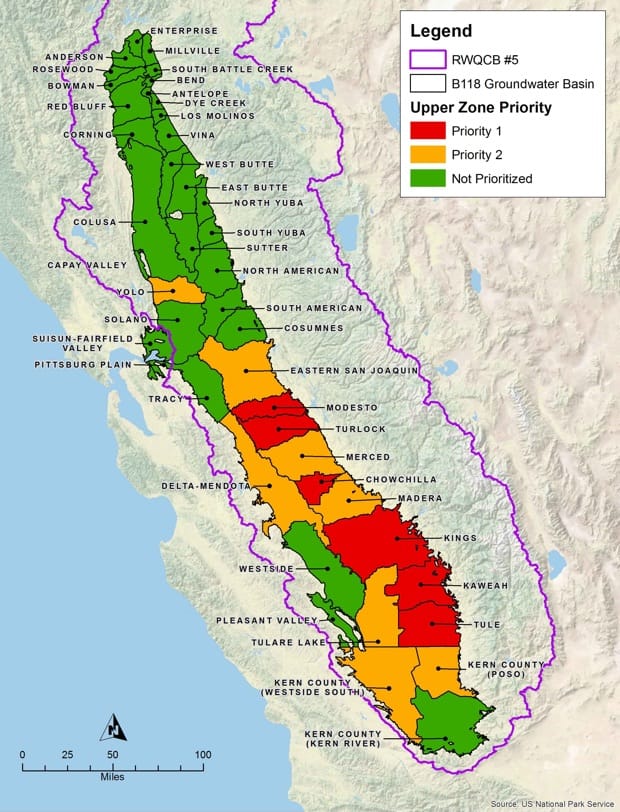
Groundwater basins are divided into priority levels by the California Department of Water Resources based on groundwater contamination levels. Find your management zone or view the priority basins across the Central Valley here. The Central Valley Water Board required nitrate permittees to select one of two approaches for complying with the Nitrate Control Program. Permittees had to either (1) assume all compliance costs and responsibilities individually, or (2) share compliance costs and responsibilities by forming a local Management Zone. Five Management Zones have formed within Priority 1 basins to implement the nitrate requirements and provide safe drinking water where needed. Management Zones in Priority 2 basins are currently in development. The active Management Zones within Priority 1 basins are:
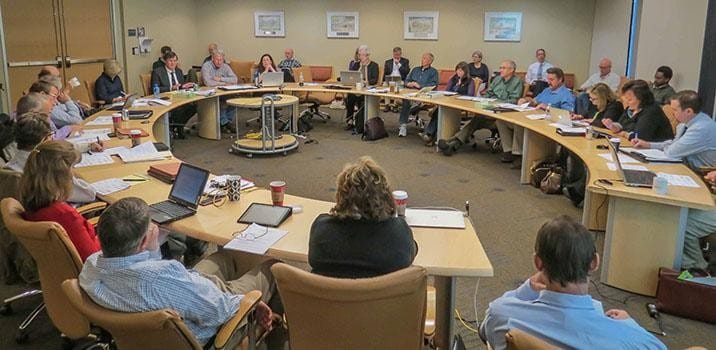
If you are interested in learning more about CV-SALTS and the Salt and Nitrate Contamination Programs you can attend their public meetings which are held bi-monthly. See their online calendar for upcoming meetings.
Each organization representing the 5 Management Zones in the Priority 1 Basins also holds public meetings. More information about these meetings can be found on the websites of each management zone.
Use this The CVSALTS Interactive Management Zone Map to identify your Management Zone and if you qualify for free domestic well-testing. Residents in qualifying Management Zones can use the table below to apply for free well-testing through the appropriate Management Organization and check eligibility for free bottled water delivery programs.