Mapping Hunger: How SCU Research Helps Martha’s Kitchen Address Food Insecurity
Santa Clara University's Drew Starbird, Ph.D. Leads Research, Developing an Interactive Hunger Map for Silicon Valley to Inform Data-Based Decisions.
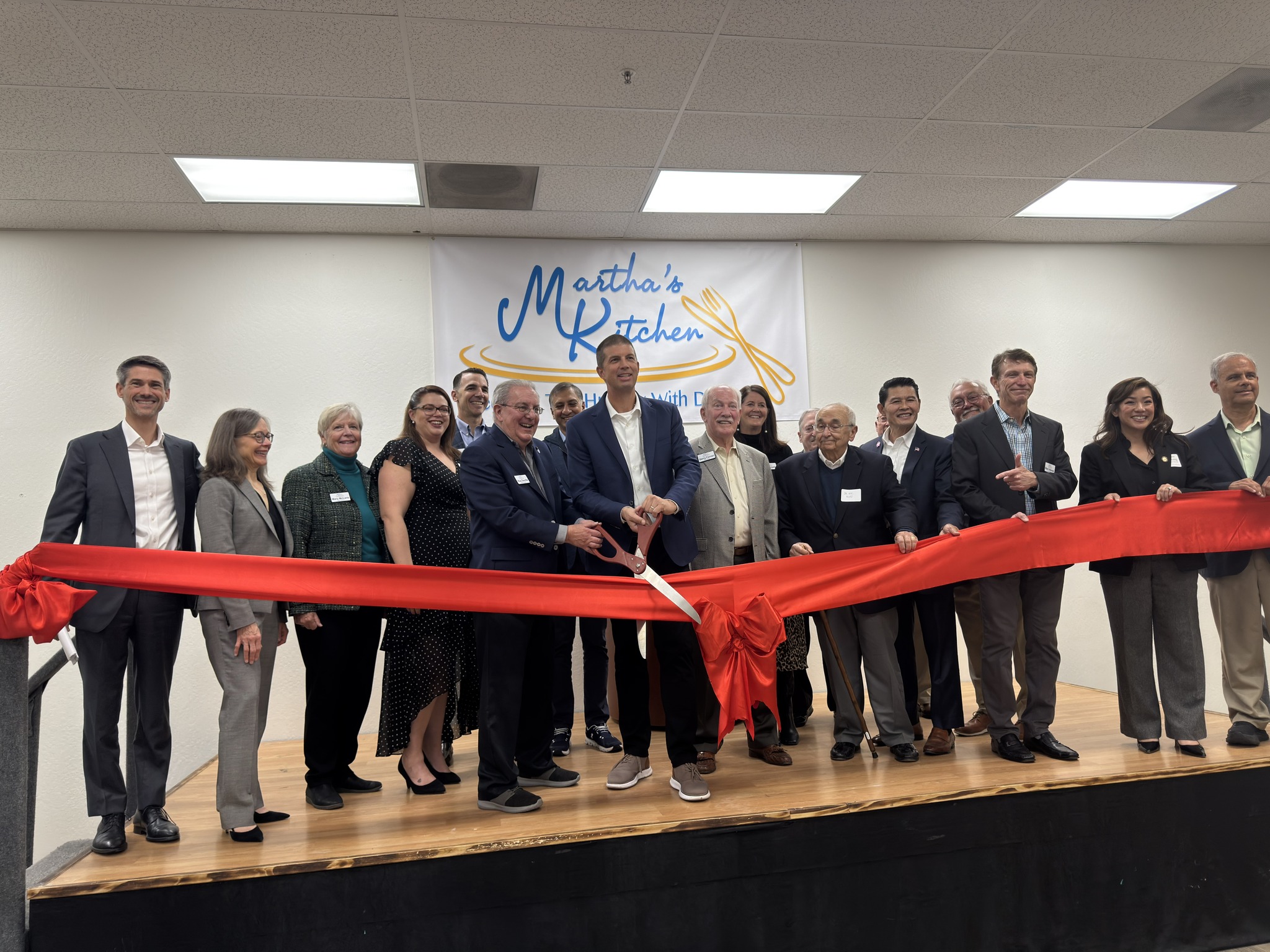
On October 15, 2025 Martha’s Kitchen, an organization committed to providing hot meal, grocery, and food rescue programs to those in need, held the grand opening for its new site in the heart of San Jose, where the need for food security is the greatest. (Photo: Ribbon cutting ceremony at Martha's Kitchen Food Hub grand opening event with pictured attendees including San Jose Mayor Matt Mahan, far left, Martha's Kitchen Executive Director Bill Lee, center, and Santa Clara District 2 Supervisor Betty Duong, far right. Photo source: Martha's Kitchen Facebook post.)
Martha’s Kitchen has many resources to study and assess the needs of the communities it serves, and Drew Starbird, Ph.D., Santa Clara University (SCU) Leavey School of Business Professor, Information Systems and Analytics and My Own Business Institute (MOBI) Executive Director, has long been among them. Starbird attended the Food Hub grand opening event with SCU student and research assistant intern Paulina Ordoñez ‘26, Public Health and Psychology,, to join the celebration and share recent findings along with an interactive hunger map.
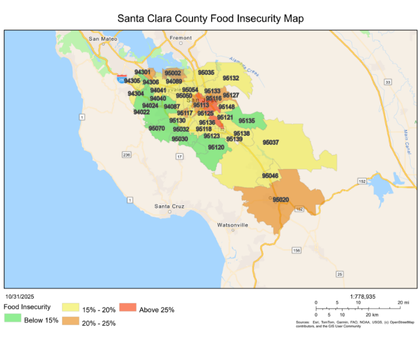
“When you enter the new facility, it becomes clear why location is such an important part of addressing food insecurity,” said Ordoñez. “By choosing this location for its new Food Hub, Martha’s Kitchen demonstrates its deep understanding of the community it serves. In the area around the food hub, nearly 30% of the households are at risk of food insecurity. This location is ideal for serving those families in need."
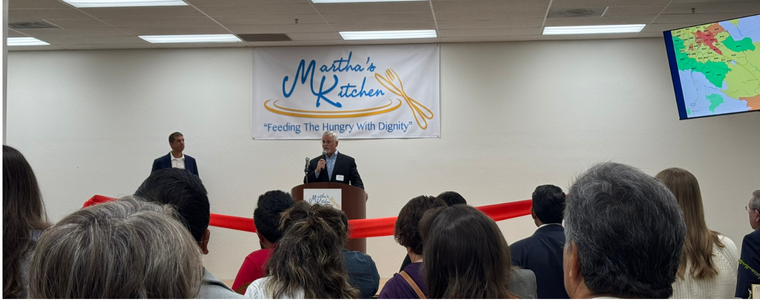
At the event Starbird and Ordoñez unveiled a new report and interactive map that identifies the risk of food insecurity across Santa Clara County at the ZIP code level. As stated in a Sourcewise post on LinkedIn, “The report provides insights to empower funders and stakeholders to make informed, data-driven decisions that strengthen the community and expand access to essential resources.” (Starbird picture below, presenting the map at the Food Hub grand opening.)
The foundation for this report began several years ago when Bill Lee, Executive Director of Martha’s Kitchen, reached out to Starbird and asked if he would consider resurrecting the Hunger Index—a project Starbird had started about 20 years earlier while serving on the Board of Second Harvest of Silicon Valley. This time, the focus would be on analyzing food insecurity at the neighborhood level to identify where the need was greatest. The goal was to gain a clearer understanding of the problem, share findings with community partners, and help direct resources to support the most vulnerable residents.
Lee assembled a coalition of food service providers to support the research, including Martha's Kitchen, Loaves and Fishes, Veggielution, The Health Trust, and Catholic Charities. Starbird pursued the project with Ordoñez joining him over the summer as a research assistant.
Other innovations in the study included measuring food insecurity in six different ways with questions from the Current Population Survey to identify food insecure households. Four household characteristics were used to predict food insecurity including household income, whether a household is renting its home, whether the householder identified as Latino or Hispanic, and whether the household already received food stamps.
“We use these predictors because other research has shown that these household characteristics are related to food insecurity in other parts of the country,” says Starbird. “Another important reason we use them is that we can measure them for every ZIP code in the county.”
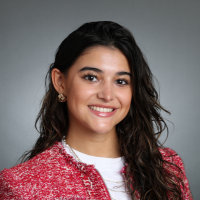
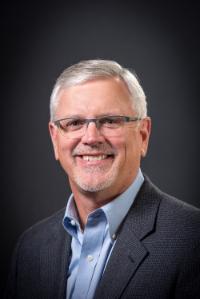
“As a Public Health major I study socioeconomic and environmental determinants of health, including resource deserts and food insecurity. Witnessing the research come to life neighborhood by neighborhood as I built the map, I felt excited to contribute meaningfully to data that can make a difference. Sharing our report and the Santa Clara Hunger Index Map at the Martha’s Kitchen Food Hub grand opening was truly inspiring,” shares Ordoñez (pictured left) of her experience.
Martha’s Kitchen pursues a mission to provide nutritious meals with dignity to people in need by mobilizing volunteers and rescued food, ensuring no one is left behind. According to the Martha’s Kitchen website, the new Food Hub will allow the organization to expand meal production to seven million meals per year. The research conducted by Starbird and Ordoñez continues to inform Martha’s Kitchen’s efforts as the organization expands its impact.
“As Martha’s Kitchen looks ahead, our new Food Hub enables us to expand our services, deepen partnerships, and strengthen our role as a cornerstone of regional food security,” shared Lee.
Bill Lee also spoke with KRON4 News Anchor Stephanie Lin on November 29, 2025. Click here to view the video clip.
Written by: SCU student, research assistant intern, and MOBI intern Paulina Ordoñez '26, Public Health and Psychology,.