Environmental Ethics Fellowship
The Fellowship in Environmental Ethics is awarded to outstanding Santa Clara University undergraduates to support a project that examines the ethical implications of an environmental topic.
2026-27 Environmental Ethics Fellowship
The rapid expansion of data centers raises a set of ethical dilemmas about who should bear the environmental costs of digital infrastructure and who should have a voice in deciding whether those costs are acceptable. The 2026-27 Environmental Ethics Fellowship will be dedicated to the development of a user-friendly ethical framework to help persons and communities think through the ethical challenges brought on by the global push for data centers. The framework will draw on literature in environmental ethics and on key arguments from Magnificent Humanity, the encyclical on AI issued in May 2026 by Pope Leo XIV.
Data centers can require substantial amounts of electricity and water, generate air pollution through backup generators, and place new demands on local infrastructure, while the benefits of the computing services they support are often distributed far beyond the communities where the facilities are located. This creates a question of distributive justice: is it fair for local communities to bear concentrated environmental and resource costs for technologies whose economic and social benefits are widely dispersed? There is also a question of responsibility and transparency: should data center operators be required to disclose their actual water consumption, energy use, emissions, and impacts on local resources, rather than leaving regulators and communities to estimate them? And when those impacts are uncertain or cumulative, how much evidence should be required before a project is approved? These questions become particularly difficult when data centers bring jobs, tax revenue, and technological investment, because the ethical issue is not simply whether their environmental impacts are acceptable, but who gets to decide what tradeoffs are acceptable, who bears the risks, and whether affected communities have enough information and power to meaningfully participate in that decision.
2026-27 Environmental Ethics Fellows
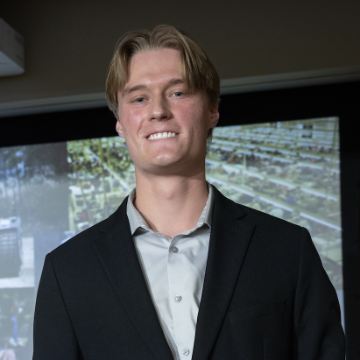
Gavin Brunsman '27
Gavin Brunsman is a Religious Studies major (Ethics, Philosophy, and Social Change Track) at Santa Clara University. As an Environmental Ethics Fellow, Gavin will examine the ethics of data center expansion, guided by Jesuit commitments to human dignity and the common good. When not researching, Gavin enjoys playing baseball, disc golf, and raising his deeply cherished kitten.

Nicholas Buckley '28
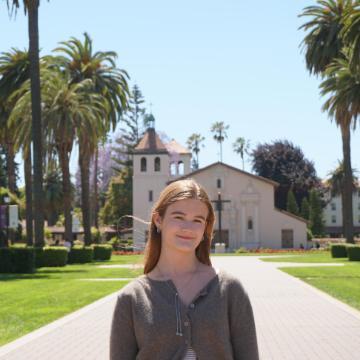
Victoria Romic '27
Victoria is a Senior pursuing a major in Environmental Science and a minor in Chemistry. She is interested in the ethical framework of environmental technology deployment, such as carbon capture technologies, and considering who pays the cost and who benefits. Her fellowship will be focusing on creating an ethical framework for AI use considering the environmental impacts of data centers. She works with Professor Iris Stewart-Frey in the Water and Climate Justice Lab and is also a Silicon Valley Power Sustainable Futures Fellow. In her free time she enjoys running, hiking, and listening to music!