Do You Think You Understand AI Consciousness?
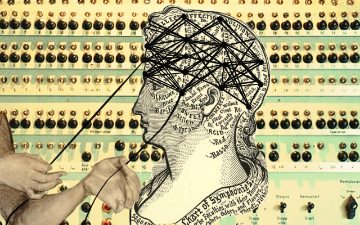
The recent papal encyclical entered a broadening debate.
Irina Raicu is the director of the Internet Ethics program (@IEthics) at the Markkula Center for Applied Ethics. Views are her own.
In May, Pope Leo XIV released an encyclical titled “Magnifica Humanitas.” Over the summer, the ethics center hosted a series of webinars focusing on several AI-related points from the encyclical; one of them, featuring a conversation among Brian Green (who directs the center’s Technology Ethics program), Fr. William O’Neill, SJ (who leads the center’s Immigration Ethics work), and Professor Erick Ramirez (who currently chairs Santa Clara University’s Philosophy department) was on AI and consciousness. The recording of that session is now available.
The encyclical’s position on AI consciousness has been criticized by some for not engaging with the arguments in support of the view that AI models may be—or become—conscious. Here is, in part, what the encyclical argues (in paragraph 99):
These systems merely imitate certain functions of human intelligence. In doing so, they often surpass human intelligence in speed and computational capacity, offering tangible benefits across many fields. Yet this power remains entirely tied to data processing. So-called artificial intelligences do not undergo experiences, do not possess a body, do not feel joy or pain, do not mature through relationships and do not know from within what love, work, friendship or responsibility mean. Nor do they have a moral conscience, since they do not judge good and evil, grasp the ultimate meaning of situations, or bear responsibility for consequences. They may imitate language, behavior and analytical skills, or even simulate empathy and understanding, but they do not understand what they produce, for they lack the affective, relational and spiritual perspective through which human beings grow in wisdom. Even when these tools are described as capable of ‘learning,’ their way of doing so is different from that of a human person. It is not the experience of those who allow themselves to be shaped by life and grow over time through choices, mistakes, forgiveness and fidelity. Rather, it is a form of statistical adaptation based on data and feedback, which can be very effective, but does not imply inner growth.
In keeping with the letter and spirit of the encyclical, the webinar’s conversation focused primarily on AI’s impact on human consciousness—rather than on the debate about whether or not AI systems may be (or become) conscious. Toward the end, however, Prof. Ramirez summarized briefly the arguments that some philosophers and technologists have made in support of the claims that AI models might be conscious, or that we should treat them as if they are.
For those interested in diving deeper into those arguments, here are a couple of articles (the second one punchily subtitled “If you think you understand AI consciousness, you don’t understand AI consciousness”):
- https://www.polytropolis.com/p/contra-chiang-on-machine-consciousness
- https://ai-frontiers.org/articles/the-evidence-for-ai-consciousness-today
Here, also, are a couple of explorations of counter-claims (one of them, by a senior staff research scientist at GoogleDeepMind—presenting, as he makes clear, his own views, not necessarily those of his employer—is titled “The Abstraction Fallacy: Why AI Can Simulate But Not Instantiate Consciousness”):
- https://philpapers.org/archive/LERTAF.pdf
One of the papers linked to above adds an important point on the debate; the author writes,
I recently conducted what I think is the largest survey of alignment researchers to date: 84% are male and the majority are under age 30, with heavily technical backgrounds… . Recognizing this homogeneity isn't a criticism of individuals; it’s data that should motivate a structural assessment of collective blind spots. … [R]esearching consciousness in novel systems is a challenge where cognitive and disciplinary diversity matters greatly.
The encyclical’s engagement with this topic is likely to prompt more of that needed diversity of input.
In addition, the encyclical itself discusses much more than AI; it includes, for example, an apology for the church’s role in the institution of slavery, and a discussion of the ways in which church doctrine changes over time. That discussion signals an openness to ongoing dialogue and learning—much needed in every analysis of AI’s changing form and impacts on our world.
Image: Hanna Barakat & Cambridge Diversity Fund / https://betterimagesofai.org / cropped: https://creativecommons.org/licenses/by/4.0/